A provisional is never “just a temporary.” It protects the prep, seals dentin, preserves occlusion and contacts, guides soft tissue, previews contour and esthetics, and often reveals whether the definitive plan is working before the final seat. Current guidance on provisional materials makes that clear: the temporary is part of the restorative system, not a disposable afterthought, and the material and handling choices made during temporization directly affect patient comfort and the final result.
That is why provisional cement selection deserves more attention than it usually gets. The right provisional cement or temporary crown cement should hold through function, reduce postoperative irritation, clean up predictably, and still allow safe removal when the final restoration is ready. The wrong choice can create the three problems clinicians hate most: a loose temporary, a sensitive tooth, or a provisional that feels welded on when it is time to retrieve it. A useful cementation framework is to start with indication, retention needs, and isolation reality, not brand habit.
This guide explains how to choose provisional cement for real cases, with a focus on retention, temporary cement sensitivity, and easy retrieval. It also covers eugenol vs non eugenol cement, temporary crown recement, provisional crown retention, and implant provisional cement so you can make decisions that serve both the temporary phase and the final restoration.
Why provisional cement matters more than many teams think
A temporary crown fails for only a few basic reasons. It comes off, it leaks, it irritates the tooth, it traps excess cement, or it becomes difficult to remove without damaging the prep or provisional. In other words, every provisional cement decision is really a three-way balance between retention, biologic comfort, and retrievability. That balance becomes more demanding in short preps, long-span provisionals, heavily worn occlusions, implant cases, and long time-in-service situations.
A good temporary crown cement needs to do four jobs at once:
- Hold the provisional through function and hygiene
- Seal the preparation well enough to limit microleakage and sensitivity
- Allow clean, efficient removal of excess cement
- Release the provisional later without distorting the prep or damaging the restoration
Those priorities show up consistently in provisional-cement studies and clinical guidance. Provisionals cemented with temporary luting agents can be susceptible to washout, marginal leakage, and even secondary caries when left in service too long, while cement-application studies show that technique can change fit without necessarily improving retention.
The practical message is simple: provisional cement is not a separate decision from provisional design, occlusion, or duration. If the fit is weak, the prep is over-tapered, or the provisional material is too fragile for the span, changing the cement alone rarely solves the real problem.
Start with the case, not the brand
One of the fastest ways to improve temporary crown cement decisions is to stop asking, “What do we usually use?” and start asking, “What does this case need?”
A helpful cementation mindset is to first decide whether the case is fundamentally a retention case or a bonding case, and then ask whether the protocol can actually be executed under the isolation conditions present that day. That logic applies to the provisional phase too. A highly retentive prep on a short-service single unit does not need the same temporary crown cement strategy as a short molar prep in a bruxer wearing a long-term PMMA provisional.
Here are the questions that should drive provisional cement selection every time:
- How retentive is the preparation on its own?
- How long will the provisional be in service?
- Is the tooth vital and already prone to sensitivity?
- Will the definitive restoration be resin-bonded?
- Is this a single unit, a long span, or an implant provisional?
- How easy will retrieval need to be?
- Is the provisional material strong enough for the planned service time?
Those questions matter because provisional crown retention is not determined by cement alone. Current provisional-material guidance recommends bis-acryl for fast, short-service single units and PMMA for longer wear, implant temporization, vertical-dimension trials, multi-unit spans, and heavy function. If time and stress go up, the provisional itself usually has to get stronger before the cement choice can work predictably.
Eugenol vs non eugenol cement: the choice that affects both today and the final seat
The eugenol vs non eugenol cement decision is still one of the most important judgment calls in temporization. Eugenol-containing cements have a long history in dentistry because they are easy to retrieve and can have a palliative effect that helps very sensitive prepared teeth. Reviews of luting materials note that zinc oxide eugenol has traditionally been valued for its low strength and easy removal, and other studies describe ZOE temporary cements as useful because of their sedative effect on sensitive teeth.
The problem is what comes next. Eugenol is a radical scavenger, and multiple studies and reviews report that it can interfere with resin polymerization and reduce the bond strength of resin-based definitive materials. A 2003 study found that temporary cement with eugenol significantly reduced resin-cement retention compared with non-eugenol temporary cement, and later reviews continued to describe non-eugenol as the safer default when adhesive or resin-based final cementation is planned.
That is why modern workflows lean heavily toward non-eugenol temporary crown cement. Current provisional guidance specifically recommends spot-etching enamel and using a non-eugenol temporary cement for provisionals, especially in digital PMMA workflows. That advice fits present-day restorative reality, because many final restorations now rely partly or completely on resin bonding, whether the case is zirconia with an MDP strategy, lithium disilicate with HF and silane, or another adhesive pathway.
The most practical way to think about eugenol vs non eugenol cement is this:
- Choose non-eugenol as the default whenever the final restoration may be resin-bonded.
- Consider eugenol more seriously when the tooth is highly sensitive, service time is short, and the definitive cementation plan does not depend on resin bonding.
- Do not assume “non-eugenol” automatically solves every contamination issue. Residual temporary cement of several types can still affect final adhesive performance if cleanup is poor.
There is nuance here. More recent evidence suggests the negative effect of eugenol on final bonding may be most relevant in the short term and may diminish after longer intervals in some situations. But for everyday decision-making, the safer rule remains straightforward: if a bonded final restoration is likely, default to non-eugenol temporary crown cement and clean meticulously at the definitive appointment.
Provisional crown retention starts before the cement syringe
Clinicians often talk about provisional crown retention as if it is mostly a cement problem. It rarely is. Cement helps, but retention begins with prep geometry, provisional material, internal fit, contacts, occlusion, and the length of time the temporary must survive. That is why a provisional that keeps dislodging in a bruxer on a long-span bridge usually needs more than a different provisional cement. It may need a different provisional material, better connector design, occlusal relief, or a shorter time to final delivery.
Material choice matters more than many teams expect. Bis-acryl is efficient for single units and short spans with short service times, and it captures margins quickly chairside. PMMA, especially milled PMMA, is better suited for longer wear, tissue maturation, implant temporization, vertical-dimension trials, long-span bridges, and parafunction because it offers better fracture resistance, polishability, and color stability over time. In practical terms, stronger provisional materials reduce the temptation to solve every provisional crown retention failure with stronger cement.
Technique matters too. A well-designed study on provisional crown cementation found that bulk filling the provisional with luting cement significantly increased adaptation discrepancies and that placing cement on the axial walls and cervical third of the intaglio offered the best combined result for adaptation and retention. Adding vent holes improved adaptation while maintaining favorable retention. That is a clinically useful reminder that more temporary crown cement is not necessarily better temporary crown cement.
A simple provisional crown retention protocol looks like this:
- Use the least retentive cement that can still predictably survive the service period.
- Match the provisional material to the expected wear time and occlusal load.
- Keep occlusion light enough that the temporary is not being pounded loose.
- Apply cement thoughtfully rather than flooding the intaglio.
- Reevaluate fit, contacts, and prep form if a provisional repeatedly debonds.
That sequence works because it treats provisional cement as part of the restorative system instead of as a rescue product.
Temporary cement sensitivity: why some provisionals feel fine and others sting
Temporary cement sensitivity is usually not caused by one thing. A practical post-cementation sensitivity checklist lays out the usual differential clearly: pulpal irritation from provisional trauma, resin or cement irritation, microleakage at an open margin, or occlusion that feels high. That is helpful because it shifts the question from “Which cement hurts less?” to “What part of the provisional phase is irritating the tooth?”
Older pulpal literature makes the same point in a more fundamental way. Reviews on post-preparation sensitivity emphasize that poorly fitting provisionals can expose cut dentin to oral fluids, and that trauma from tooth preparation itself can prime the pulp for discomfort if the provisional phase is not handled well. In other words, temporary cement sensitivity is often a seal-and-trauma problem before it is a brand problem.
The best way to reduce temporary cement sensitivity is to tighten the whole provisional workflow:
- Fit the provisional accurately and finish the margins cleanly.
- Keep the temporary in correct occlusion; even a slight high spot can create bite pain that patients describe as sensitivity.
- Use a desensitizer on vital teeth with broad dentin exposure when indicated.
- Choose a cement that matches both the sensitivity profile and the final restorative plan.
- Avoid leaving a washout-prone temporary in service longer than intended.
Current guidance specifically notes that glutaraldehyde-based desensitizers can reduce dentinal fluid flow on vital preps without harming retention when used appropriately. That is valuable because it reminds clinicians that patient comfort does not have to come only from choosing a softer provisional cement. Often the better answer is to seal dentin more effectively and keep the temporary on a clean, comfortable occlusal scheme.
This is also where the eugenol discussion becomes practical. For a very sensitive vital prep, eugenol may still seem attractive because of its palliative reputation. But if the final restoration will be bonded, many clinicians are better served by a non-eugenol temporary crown cement plus desensitizer plus excellent marginal seal, rather than relying on eugenol and risking interference with the final resin workflow.
Temporary crown recement: when a loose provisional should change your plan
Temporary crown recement is common enough that many offices treat it like an inconvenience rather than a diagnostic event. That is a mistake. A provisional that comes off once may simply need cleaning and fresh cement. A provisional that comes off twice is usually telling you something about the prep, occlusion, material, or case timing.
A good temporary crown recement appointment should follow a short checklist:
- Remove all old cement from both the tooth and the provisional.
- Inspect the provisional for fracture, margin distortion, or thin spots.
- Check the prep for taper, short walls, exposed dentin, or contamination.
- Reevaluate contacts and occlusion before placing fresh cement.
- Decide whether the same temporary crown cement is still appropriate.
- If the case keeps failing, upgrade the material, reduce functional load, or move the definitive timeline forward.
That kind of temporary crown recement protocol prevents the common error of simply adding more provisional cement to the same flawed situation.
Cleanup matters here more than many clinicians realize. Research on provisional contamination and cleaning shows that even eugenol-free temporary cements can reduce final adhesive performance if residues remain on the tooth, and studies suggest that mechanical cleanup followed by polishing with pumice can improve the bond strength of later adhesive cementation. Other work has shown that methods such as aluminum-oxide air abrasion or careful surface pretreatment can help restore bond performance after temporary cement contamination.
So the real lesson of temporary crown recement is not just “recement it.” It is “figure out why this temporary lost retention, correct the reason, and protect the final restorative phase from the contamination you are creating along the way.”
Implant provisional cement: a different set of priorities
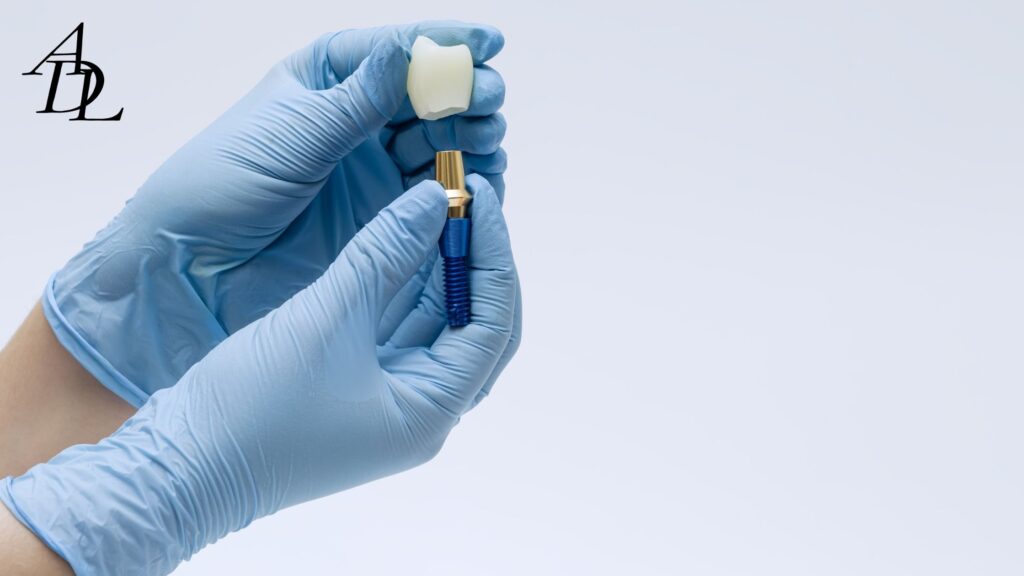
Natural-tooth temporaries and implant temporaries are not the same problem. With an implant provisional cement decision, pulpal sensitivity is largely off the table, but retrievability, excess cement, and tissue health move to the front. That is why many implant clinicians prefer screw-retained provisionals when possible: the easy retrievability of screw-retained restorations is one of their biggest advantages, and several reviews note that excess cement is a possible risk indicator for peri-implant disease.
That does not mean cement-retained implant provisionals are wrong. They can be clinically useful when angulation, esthetics, or restorative space makes a screw channel undesirable. But implant provisional cement should be selected more cautiously than temporary crown cement on natural teeth, because the cost of excess cement can be biologically significant and the cost of over-retention is future retrieval difficulty. Reviews of cement-retained implant restorations emphasize minimizing cement excess, while implant-retention guidance notes that provisional cement is most defensible when the abutment has strong intrinsic retention and the clinician is intentionally prioritizing retrievability.
In practice, the best implant provisional cement rules are simple:
- Prefer screw-retained provisionals when retrievability is a major concern.
- If you must cement an implant provisional, use the smallest practical amount of cement.
- Keep margins as coronal and cleansable as the case allows.
- Remove excess meticulously and verify it.
- Do not treat provisional cement as a long-term solution on a weakly retentive abutment.
There is a second implant-related distinction that matters in modern workflows. When the issue is not crown-to-abutment cementation but extraoral bonding of a ceramic component to a ti-base, current guidance recommends a no-eugenol, radiopaque dual-cure adhesive resin cement with proper primer chemistry. That is a different interface from traditional implant provisional cement, but it reinforces the same broader lesson: implant temporaries and implant components require more precise cement thinking than many clinicians assume.
Best-practice decision tree for provisional cement
If you want a practical shortcut, use this chairside framework.
Choose a lighter provisional cement approach when:
- The prep has good retention and resistance form.
- The provisional is a short-service single unit.
- Easy retrieval is a priority.
- The patient is not a heavy bruxer.
- The provisional material and occlusion are already well controlled.
Choose a stronger provisional cement approach only after checking these first:
- Is the provisional material robust enough for the load?
- Is the provisional staying in service longer than originally planned?
- Is the occlusion too heavy?
- Is the prep too short or too tapered?
- Would PMMA serve better than bis-acryl in this case?
If those factors are wrong, changing the temporary crown cement alone often just delays the next failure.
Default to non-eugenol when:
- The definitive restoration may be resin-bonded.
- The final substrate is zirconia, lithium disilicate, or another adhesive case.
- You want to reduce risk of polymerization interference at the definitive seat.
- You are working in a digital provisional workflow where clean transition to final bonding matters.
Consider eugenol more carefully when:
- The tooth is highly sensitive and the provisional phase is short.
- The final restoration is more likely to be conventionally cemented.
- You are confident cleanup and final-cement timing will not jeopardize a later resin bond.
Even then, that choice should be deliberate, not habitual.
Practical case examples
Case 1: Vital molar, short-term provisional, definitive zirconia crown planned
The tooth is sensitive after prep, but the definitive restoration may need an adhesive zirconia pathway if retention ends up borderline. In this case, the safer choice is often non-eugenol temporary crown cement, accurate provisional fit, occlusal refinement, and a desensitizer if needed. That preserves the option for a clean resin workflow later and avoids the eugenol-resin conflict.
Case 2: Bruxing patient with a long-span provisional bridge
Repeated debonding here is usually not just a provisional cement issue. Current provisional guidance would push the clinician toward milled PMMA, stronger connector design, thicker posterior anatomy, and occlusal protection because PMMA performs better in long wear and high-load situations. A stronger temporary crown cement may help, but only after the provisional itself is upgraded.
Case 3: Repeated temporary crown recement on a short prep
This is the classic sign that the office is treating a geometry problem like a cement problem. The better move is to clean everything thoroughly, reassess provisional crown retention factors, lighten contacts and excursions, and decide whether the case needs a better-fitting PMMA provisional or a faster path to the definitive restoration. Repeated temporary crown recement should trigger a plan review, not just a fresh mix.
Case 4: Cement-retained implant provisional in the esthetic zone
If angulation or esthetics rule out a screw-retained provisional, implant provisional cement should be used sparingly and retrievably, with strict excess-cement control and the expectation that the provisional may need to come off again. When retrieval and tissue health are both major concerns, screw retention still holds the clear advantage.
The simplest rule: choose the weakest cement that can still do the job
That sentence captures the heart of good provisional cement selection. If the temporary only needs to last a short time on a retentive prep, do not overbuild the retention problem. If the tooth is sensitive, solve sensitivity with fit, seal, occlusion, and desensitization first, then decide whether eugenol adds enough value to justify the later bonding risk. If the provisional keeps coming off, fix the provisional system rather than assuming stronger temporary crown cement is the only answer. And if the case is on an implant, remember that retrievability and excess cement control often matter more than brute retention.
Conclusion
Provisional cement choice is one of the clearest examples of small decisions shaping big restorative outcomes. The best provisional cement or temporary crown cement is not the one with the strongest marketing story. It is the one that fits the prep, the provisional material, the patient’s sensitivity profile, the expected service time, the need for retrieval, and the definitive cementation plan. When clinicians think that way, retention improves, temporary cement sensitivity falls, temporary crown recement becomes less common, and implant provisional cement decisions become more predictable.
Associated Dental Lab is a dentist’s trusted Full-Service Dental Lab in Los Angeles, crafting smiles since 1962. ADL supports both analog and digital workflows, direct technician communication, CAD/CAM manufacturing, consistent turnaround, and provisional options ranging from chairside-friendly guidance to printed and milled PMMA for longer-wear and implant cases. If you want a lab partner who understands not just the final restoration but the provisional phase that makes the final seat easier, contact us at Associated Dental Lab and let us become your Dentists trusted Full-Service Dental Lab.
FAQ
What is the best provisional cement for a routine single-unit crown?
The best provisional cement for a routine single-unit case is usually the least aggressive temporary crown cement that will survive the planned service time. On a well-retained prep with short service, that often means a non-eugenol option that gives good cleanup and easy retrieval without compromising future resin bonding. The provisional material and occlusion still matter just as much as the cement choice.
How should I think about eugenol vs non eugenol cement when a bonded final crown is planned?
For eugenol vs non eugenol cement decisions, non-eugenol is usually the safer default when a bonded final restoration is planned. That is because eugenol has been shown in reviews and studies to interfere with resin polymerization and reduce resin bond strength in some conditions. While the adverse effect may diminish over time in some cases, most modern adhesive workflows still favor non-eugenol temporary crown cement plus careful cleanup.
Why does temporary crown recement keep happening on some cases?
Repeated temporary crown recement usually means the problem is larger than the cement itself. Common causes include short or over-tapered preps, heavy occlusion, long-span provisionals, thin or brittle materials, and prolonged time in service. A better temporary crown recement strategy includes full cleanup, fit and occlusion review, and sometimes a stronger provisional material such as PMMA rather than simply switching to a more retentive provisional cement.
What causes temporary cement sensitivity?
Temporary cement sensitivity can come from exposed dentin, pulpal irritation from prep trauma, microleakage, open margins, or occlusal high spots. Current checklists also flag provisional trauma and resin irritation as contributors. The most effective fixes are usually better provisional fit, cleaner margins, occlusal adjustment, and desensitization when indicated, rather than changing temporary crown cement blindly.
What is the safest implant provisional cement strategy?
The safest implant provisional cement strategy is often to avoid cement altogether and use a screw-retained provisional when the case allows, because retrievability is a major advantage and excess cement is a recognized risk indicator for peri-implant disease. When a cement-retained provisional is necessary, implant provisional cement should be used in minimal volume, with strict excess-cement control and the expectation of future retrieval.
Does stronger provisional cement always improve provisional crown retention?
No. Provisional crown retention is influenced by prep form, provisional material, internal fit, occlusion, and service time in addition to cement type. Studies on cement application show that flooding the crown with temporary crown cement can worsen adaptation without improving retention. In many cases, better fit and better provisional design outperform stronger cement.
Can non-eugenol temporary cement still affect final bonding?
Yes. Even when eugenol is not involved, residual temporary cement can still reduce final adhesive performance if the tooth surface is not cleaned well. Research suggests that mechanical removal and polishing with pumice, and in some cases air-abrasion-based cleanup, can improve later bond strength. So “non-eugenol” is helpful, but it is not a substitute for meticulous cleanup before the definitive seat.