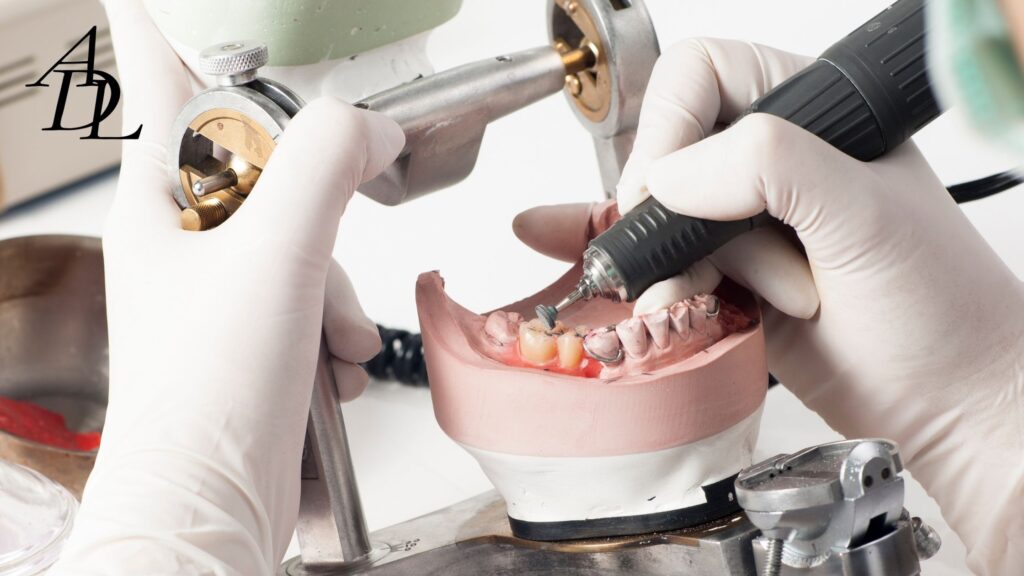
A crown that looks perfect on the die can still become a seat-day headache if the final occlusal check is rushed. Tight contacts can keep the restoration from fully seating. A crown that is slightly high in maximum intercuspation can feel “huge” to the patient within minutes. A tiny excursive interference can turn into tenderness, fractured porcelain, or a phone call the next morning. That is why a short, disciplined occlusion checklist belongs in every crown seating checklist.
The goal is not to make occlusion complicated. The goal is to make it consistent. A fast audit performed in the same order every time helps you catch incomplete seating, contact errors, high spot detection problems, and excursive interferences before they become cemented-in problems. Reviews on restorative occlusion note that restorations that conform to the patient’s existing dentition generally perform better than restorations left in high occlusion or with excursive interferences, and that careful occlusal analysis reduces postoperative adjustments and stress on restorations.
This guide turns that principle into a practical seat-day protocol. It is meant for single crowns, short bridges, implant crowns, and most everyday restorative deliveries where you want a quick, reliable contact and occlusion check without falling into “paper mark mythology.”
Why a quick occlusion audit matters before cementation
Occlusal errors are rarely isolated errors. They tend to cluster with seating and contact problems. If interproximal contacts are too tight, a crown may stop short, which can make the margin appear open and the occlusion appear high even though the “true” problem is interproximal. A J Prosthet Dent study on crown interproximal evaluation stated directly that complete seating may not be possible when contacts are excessively tight, and incomplete seating can lead to open margins, gingival inflammation, and recurrent caries.
This matters because crown delivery appointments routinely involve adjustments even in digital workflows. In a randomized clinical trial on posterior implant crowns, interproximal contacts and occlusion were checked with floss, 12-μm occlusion foil, and 8-μm shimstock, and many restorations still required adjustments before delivery. The adjustment burden was not theoretical; it was measurable chair time.
A quick occlusion checklist helps you do three things well:
- confirm that the crown is truly seated before you trust what the paper shows
- separate contact problems from occlusal problems
- verify that the restoration adds to the patient’s occlusion rather than changing it unnecessarily
What your indicators can and cannot tell you
A good crown seating checklist starts with knowing what each tool is for. Most seat-day confusion comes from asking one indicator to do the job of another.
Articulating paper and foil: good for location, poor for force
Articulating paper is excellent for showing where contact occurs. It is not dependable for telling you how much force is on that contact. In the Qadeer study, the largest articulation mark matched the most forceful tooth in the quadrant only 38.3% of the time, and the authors concluded that mark size is an unreliable indicator of applied occlusal force. Similar work by Carey and others also found that paper mark size does not directly represent occlusal load.
That means your contact and occlusion check should use bite paper or foil to find the contact, not to “guess” how heavy it is based on a big dark mark.
Shimstock: good for “hold”
Shimstock is thinner than most articulating papers and gives you a more precise sense of whether a contact actually holds under load. Spear describes shimstock as roughly 8 to 13 microns thick and useful for a micro-assessment of occlusal holding forces. A laboratory study by Harper and Setchell showed that 8-micron shimstock responds to very small gaps and varying forces, which is why many clinicians use it after they have identified contact location with foil.
In practical terms: bite paper tells you where. Shimstock helps tell you whether the contact is actually holding.
Floss is not enough for interproximal assessment
Floss is useful, but it should not be your only interproximal test. The Hansen study showed that floss and explorer were the least accurate methods for assessing interproximal fit of crowns. Shimstock was the most accurate, and occlusal articulating film was also highly accurate while providing a visible mark for adjustment.
That does not mean you should stop using floss. It means floss is part of the sequence, not the whole sequence.
The pre-seat baseline: what you should know before the crown touches the prep
A simple but underused part of any crown seating checklist is the baseline check. Before you try in the crown, confirm how the adjacent and contralateral teeth behave without it. A concise crown insertion summary by Faraj Edher recommends verifying contacts on adjacent and contralateral teeth with articulating paper and shimstock before placing the crown, then checking that the final restoration reproduces those positive contacts after seating and cementation.
This matters because it gives you a reference. Without a baseline, it is easy to “invent” a new occlusal pattern while adjusting the crown.
A good pre-seat baseline takes less than a minute:
- dry the field
- have the patient close into maximum intercuspation
- mark adjacent and contralateral contacts with thin foil or paper
- check the key holding contacts with shimstock
- note excursive pattern if the restoration is in guidance or near it
The quick occlusion audit: a practical seat-day protocol
This is the part to print, laminate, and keep near the crown delivery tray. The sequence matters.
Step 1: Dry try-in and complete seating first
Before any occlusal marking, confirm the restoration is seated all the way down. The 3M fixed-restoration try-in checklist places proximal contacts before fit evaluation and occlusion, which reflects a simple truth: if a crown is not seated, your occlusal markings are misleading. The same checklist recommends crown margin probing and, when needed, silicone fit checking before final approval.
At this stage:
- try in the crown dry
- verify seating visually and with an explorer
- probe the margin circumferentially
- do not trust the bite mark until you trust the seat
Step 2: Check proximal contacts before occlusion
If the contact is too tight, the crown may stop short and everything downstream looks wrong. This is one of the highest-yield steps in the entire occlusion checklist.
A practical sequence is:
- floss first for basic resistance
- if floss suggests excessive tightness or you need a better read, confirm with shimstock or articulating film
- adjust the contact on the restoration, not the adjacent tooth, and re-seat before continuing
The Hansen paper supports this sequence because shimstock and articulating film were more accurate than floss/explorer for judging interproximal fit.
Step 3: Do a first static contact and occlusion check
Once the crown seats fully and contacts are acceptable, move to static occlusion. The 3M checklist specifically separates static occlusion and dynamic occlusion, using shimstock and occlusion foil for static occlusion and foil for dynamic occlusion.
At this point:
- use thin occlusion foil or paper to identify contact location
- have the patient tap lightly into maximum intercuspation
- compare the crown’s contact pattern to adjacent and contralateral reference contacts
- avoid interpreting mark size as force; use it as a location map only
Step 4: Use high spot detection the right way
High spot detection is one of the easiest places to overadjust a crown. The “big mark = high spot” assumption is not reliable. Qadeer’s findings showed mark size has a low causative relationship with force, and Carey’s work supports the same caution.
A better way to think about high spot detection:
- identify contact location with foil
- use shimstock to determine whether the contact is holding too strongly, appropriately, or weakly
- compare the crown’s holding behavior to the patient’s baseline contacts rather than to the mark size alone
Step 5: Follow shimstock/bite paper steps in the correct order
A predictable set of shimstock/bite paper steps looks like this:
- Use thin bite paper or foil to show where the crown touches.
- Use shimstock on the same area to confirm whether it holds.
- Adjust only the contact you can identify and confirm.
- Re-mark and re-test.
This is not theoretical. In the Derksen implant crown trial, clinicians checked occlusion with 12-μm foil and 8-μm shimstock, and a contact that marked with foil but did not tug on shimstock was considered weak but clinically acceptable.
That is a useful clinical concept even outside implant crowns: foil gives you the map; shimstock tells you whether that map represents a functional hold.
Step 6: Evaluate excursive interferences separately
Do not blend static and dynamic checking into one vague “bite check.” The 3M checklist separates static occlusion and dynamic occlusion for a reason, and the Edher summary specifically includes verifying excursive movement contacts on the crown.
Check:
- right excursion
- left excursion
- protrusion if the tooth/restoration participates in guidance
Excursive interferences matter because restorative reviews note that restorations conforming to the existing dentition generally show better longevity than those left with interferences during excursive movements. High occlusion and excursive interferences are linked to unfavorable forces, localized stress concentration, microcracks, and debonding risk over time.
Step 7: Use a consistent occlusal adjustment sequence
A smart occlusal adjustment sequence prevents you from chasing your own adjustments.
A practical sequence is:
- seat fully
- correct proximal contact if needed
- check static contacts in MIP
- verify holds with shimstock
- check excursive interferences
- polish adjusted areas
- re-check everything again
If you adjust dynamic contacts before static seating is confirmed, you can lose the true problem and create a new one.
Step 8: Re-check after cementation
A crown seating checklist is incomplete if it ends before final verification. After cementation and cleanup:
- verify proximal contacts again
- verify margins
- repeat the contact and occlusion check
- confirm positive contact on adjacent and contralateral teeth
- finish with shimstock hold verification where it mattered before cementation
This matters because seating can change subtly under cement, and cleanup or pressure during seating can alter what you felt at the dry try-in.
Common seat-day traps that make occlusion look wrong
A quick occlusion audit works best when you know the common false positives.
Tight interproximal contacts masquerading as high occlusion
This is the classic one. If the crown is held up by a tight mesial or distal contact, the bite looks high and the margin looks open. Hansen’s study is especially useful here because it explicitly links excessively tight contacts to incomplete seating and the complications that follow.
Reading paper marks as force maps
Large marks are not a reliable substitute for force measurement. If you grind the “largest” mark every time, you will occasionally grind the wrong tooth contact.
Skipping the baseline
If you never checked adjacent and contralateral hold before trying in the crown, you have no real target. The Edher crown-insertion summary is helpful because it makes this baseline explicit.
Ignoring excursive interferences because MIP “looks fine”
A restoration can sit well in MIP and still interfere laterally or protrusively. The 3M checklist and other occlusal reviews both support separate dynamic checking.
Not polishing after adjustment
The Derksen trial on implant crowns describes polishing corrected zirconia surfaces for at least 2 minutes per touched surface with a zirconia-specific polishing kit after adjustment. Whether the restoration is zirconia or another material, the principle is the same: a rough adjusted surface is not a finished surface.
A one-minute version of the occlusion checklist
When time is tight, this condensed version still covers the essentials.
- Confirm baseline contact on adjacent and contralateral teeth.
- Dry try-in and verify full seating and margins.
- Check proximal contacts first.
- Use bite paper/foil to locate static contacts.
- Use shimstock to verify hold.
- Check excursive interferences.
- Adjust in sequence and polish.
- Re-check after cementation.
Practical examples
Example 1: the crown that “looks open” at the margin
A molar crown appears slightly open on the distal margin and the patient bites heavily on it at first contact. The fastest fix is not to adjust the occlusion first. It is to evaluate the distal contact. If the contact is too tight, incomplete seating can explain both the apparent open margin and the high bite. That is exactly the kind of seating error Hansen’s study warns about.
Example 2: the crown with a visible paper mark but weak function
You see a nice paper mark on the new crown, but shimstock slips through without tug. In the Derksen trial, this combination—foil mark without shimstock hold—was classified as a weak but clinically acceptable contact for that protocol. The clinical lesson is that a visible mark and a functional hold are not the same thing, which is why shimstock/bite paper steps work best together.
Example 3: the crown that is fine in MIP but hurts in chewing
The static contact and occlusion check looks acceptable, but the patient feels a “slide” or a sharp touch during side-to-side movement. That is a dynamic problem, not a static one. Separate excursive checking catches this. Occlusion reviews emphasize that excursive interferences create unfavorable forces that can reduce restorative longevity if left uncorrected.
Make the protocol team-proof
A seat-day protocol works best when the whole team knows the order, not just the dentist.
The assistant can:
- have floss, articulating foil, shimstock, explorer, and polishing instruments ready
- record baseline contacts on adjacent and contralateral teeth
- remind the doctor to re-check after cement cleanup
- document where adjustments were made for future remakes or recalls
The dentist can:
- decide contact priority and adjustment strategy
- confirm seating before trusting occlusal marks
- separate static and dynamic checks
- keep the occlusal adjustment sequence disciplined
A good lab can also make the seat-day protocol easier. Associated Dental Lab’s crown and bridge pages emphasize technician collaboration, predictable timelines, and digital scan intake, which supports a more organized seat-day workflow. ADL lists standard crown and bridge turnaround at 7 business days, accepts major scan systems directly, and offers same-day local repairs and relines for local practices when pre-arranged.
Conclusion
A fast occlusion checklist is not overkill; it is one of the most efficient ways to save chair time and avoid next-day adjustments. The smartest crown seating checklist is not the one with the most gadgets. It is the one that uses simple tools in the right order: seat first, contacts second, static check third, shimstock confirmation fourth, dynamic check fifth, then polish and verify again.
If you remember one thing, make it this: bite paper marks tell you where to look, not how much force is there. That single insight makes high spot detection more accurate, makes shimstock/bite paper steps more useful, and makes your seat-day protocol calmer and more repeatable.
Associated Dental Lab is a dentists trusted Full-Service Dental Lab in Los Angeles, with crown and bridge support, direct digital scan intake, technician collaboration, and published turnaround times that help practices keep restorative workflows predictable. If you want a lab partner that supports efficient seat-day protocol habits, clear case communication, and fewer remakes, contact Associated Dental Lab and send your next case with confidence.
FAQ
1) What should be on an occlusion checklist for crown delivery?
A practical occlusion checklist should include baseline contacts on adjacent/contralateral teeth, dry try-in verification, proximal contact evaluation, static contact and occlusion check, shimstock hold confirmation, excursive interference assessment, and a post-cement recheck. This mirrors the logic used in fixed-restoration try-in checklists and crown insertion summaries.
2) Why is a crown seating checklist different from a general bite check?
A crown seating checklist is more structured because incomplete seating and tight contacts can mimic high occlusion. The evidence shows tight interproximal contacts can prevent full seating and create open margins and other complications, so the sequence of evaluation matters.
3) Are large articulating paper marks always the high spots?
No. Studies have shown that articulating paper mark size is an unreliable indicator of occlusal force. Use paper or foil for location, then use shimstock or another confirming method for functional hold.
4) What are the best shimstock/bite paper steps on seat day?
Use bite paper or foil to identify where the crown contacts, then use shimstock to determine whether those contacts actually hold. This combination is supported by clinical trial protocols and educational occlusion checklists.
5) How do I check for excursive interferences before seating permanently?
After the crown is fully seated and static contacts are acceptable, check right excursion, left excursion, and protrusion if the tooth is involved in guidance. Dynamic occlusion should be assessed separately from static occlusion; several clinical checklists and reviews support this distinction.
6) What is the safest occlusal adjustment sequence for a single crown?
A reliable occlusal adjustment sequence is: full seating, proximal contact correction if needed, static contact check, shimstock hold check, excursive assessment, then polishing and re-verification. This sequence reduces false adjustments and fits with published try-in protocols.
7) How can a lab help my seat-day protocol run more smoothly?
A good lab reduces remakes and adjustment burden by sending restorations with more predictable contacts, anatomy, and fit, and by giving your team easy ways to send scans and clarify prescriptions. Associated Dental Lab publishes direct digital scan intake and crown-and-bridge turnaround details that support a more organized seat-day workflow.