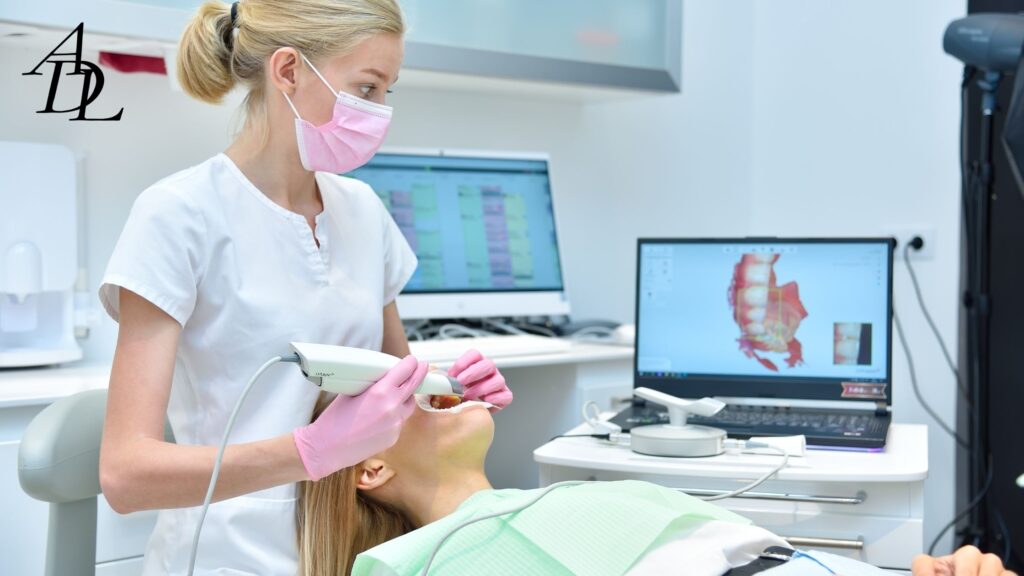
Digital impressions fail at the finish line for a simple reason: the scanner can only record what it can see, and soft tissue does not wait. In a fixed case with a sulcular or subgingival finish line, the success of gingival retraction for digital impressions is not just about whether tissue was displaced at some point. It is about whether the sulcus is still open, dry, and readable at the exact moment the scanner passes over the margin. A 2025 randomized controlled trial on gingival displacement for definitive digital impressions makes this point especially clearly: unlike conventional impressions, intraoral scanning requires the sulcus to remain open during the scan itself, and gingival tissues rebound rapidly after cord removal, narrowing the time window for accurate capture.
That timing problem is not theoretical. In a 2022 study on intraoral scanner trueness at subgingival finish lines, both scanners lost significant marginal accuracy as the finish line moved deeper subgingivally when no cord was used, and beyond 0.5 mm subgingival the marginal trueness exceeded 100 µm. When gingival displacement cord was used, marginal trueness stayed within that 100-µm threshold regardless of subgingival depth in that study.
The clinical lesson is bigger than “use retraction.” Reliable margin capture digital impression workflow depends on three things happening together: adequate displacement, real hemostasis for scanning, and a scan sequence that prioritizes the prepared tooth before the tissue rebounds. When any of those fail, the margin may look complete on screen while still being wrong enough to create chairside trouble later. That is why the most useful conversation is not whether digital is “accurate” in the abstract, but how gingival retraction for digital impressions should be timed and executed when the margin is hard to read.
This guide explains when tissue timing truly changes the result, when a retraction cord digital scan is more predictable than paste, how hemostasis for scanning affects trueness, what deep margin scanning can realistically achieve, and when a subgingival margin digital impression should be backed up with PVS or a different restorative plan.
Why gingival retraction for digital impressions is different from conventional impressions
Digital scanners do not have impression material to hold the sulcus open
Conventional elastomeric impressions have one hidden advantage: the impression material itself exerts pressure as it flows into and around the sulcus. Digital scanners do not. The 2025 RCT on gingival displacement methods states this directly: conventional impressions benefit from the pressure of impression material, which helps maintain sulcus opening, while digital impressions do not have that mechanical support. That difference is why gingival retraction for digital impressions is more time-sensitive than many clinicians expect.
That same study also explains why “I packed the cord” is not the real benchmark. The real benchmark is whether the finish line is still exposed when the scan is made. Once the top cord is removed or the paste is rinsed out, the tissue begins to rebound. If the team stops to chat, dry neighboring teeth, scan the opposing arch, or check occlusion before the prep itself is captured, the best displacement of the appointment may already be gone. That is the operational heart of margin capture digital impression success.
What margin capture digital impression actually depends on
In practical terms, a predictable margin capture digital impression needs five conditions at once:
- the finish line must be visible circumferentially
- the sulcus must stay open long enough for the scan path to pass through it
- blood, saliva, crevicular fluid, and paste residue must be controlled
- the scanner must acquire stable data rather than noisy, overscanned mesh
- the clinician must verify the margin before moving on to the rest of the case
This is consistent with both the academic and lab-side literature. The 2026 randomized crossover clinical study found that digital impressions without retraction consistently showed reduced capture of shallow subgingival margins, while both digital and conventional impressions performed better when gingival retraction was used. A practical scan quality checklist also recommends checking circumferential margin visibility and treating tissue bridges or disappearing margins as a sign to re-isolate and rescan, not to keep painting more data over the problem.
How much displacement is enough for a reliable scan
The classic 0.2-mm rule is useful, but digital often wants more
A long-standing benchmark in impression dentistry is that about 0.2 mm of horizontal sulcular width is needed so impression material can enter the sulcus without tearing. The 2025 RCT repeats that classic threshold, but also highlights the digital complication: intraoral scanning has no impression material to keep the sulcus open once retraction is removed. That means the displacement must not only exist, but remain clinically readable through the scan.
Recent digital evidence suggests that inadequate displacement width becomes a major problem as margins move equigingival or subgingival. A 2024 in vitro study on digitally scanned single crowns concluded that deeper subgingival margins and inadequate gingival displacement widths presented challenges for digital scans. The same study was designed specifically to identify the displacement widths and finish line depths associated with clinically acceptable scan quality, reinforcing that width is not a minor variable in digital workflows.
Why deeper margins become unforgiving so quickly
The 2022 Scientific Reports study is one of the clearest demonstrations of this problem. Without gingival displacement cord, both scanners showed worsening marginal trueness as the finish line moved deeper below the gingiva, and once the finish line exceeded 0.5 mm subgingivally, marginal trueness exceeded 100 µm. At 1.0 mm subgingival, both scanners performed worst. With cord, those marginal errors stayed under the 100-µm level in that study.
That finding lines up with a 2024 study on finish line location and saliva contamination. In that work, subgingival finish lines showed greater vertical and horizontal discrepancies than equigingival finish lines, and saliva contamination increased those discrepancies across all finish line locations, with a greater effect when the finish line was subgingival. In other words, deep margin scanning is not just a visibility problem. It is a visibility-plus-moisture problem.
Retraction cord digital scan strategy: when cord still wins
Cord remains the most reliable way to create displacement
For many clinicians, the most useful takeaway from the current literature is that cord still creates the greatest displacement. The 2025 randomized controlled trial found that the impregnated retraction cord group produced the greatest horizontal and vertical displacement and the greatest sulcus depth compared with cordless paste and laser groups. A systematic review and meta-analysis reached the same overall conclusion: the cord technique resulted in greater gingival displacement width than cordless techniques.
This is why a retraction cord digital scan is often the most predictable choice when the margin is clearly sulcular or subgingival, when the biotype is thick enough to tolerate displacement, or when a little bleeding or crevicular fluid must also be controlled. The same 2025 RCT notes that impregnated cords improve hemostasis because the astringent reduces gingival crevicular fluid exudation. That matters because a dry, exposed sulcus is the real goal, not just lateral displacement in isolation.
But more displacement is not the same as zero tissue cost
The tradeoff is tissue trauma. In that same RCT, impregnated cord produced the highest gingival height loss after one month compared with the other groups. A systematic review on cordless techniques similarly found that while the conventional cord technique produced better width displacement, it also caused more bleeding or periodontal injury than cordless approaches.
So the best reading of the evidence is not “always use cord.” It is “use cord when the case needs displacement that paste may not deliver predictably.” Gingival retraction for digital impressions should be as conservative as possible, but as aggressive as necessary. In a shallow, healthy sulcus, paste may be enough. In a deeper or wetter sulcus, cord often still wins because margin capture digital impression quality depends more on reliable exposure than on theoretical gentleness.
Retraction paste vs cord: when each makes sense
Retraction paste vs cord is really a depth-and-moisture decision
The phrase retraction paste vs cord is often presented as a comfort-versus-accuracy debate. The evidence suggests a more useful framing. Cordless systems can be effective, especially when margins are not deeply buried and when minimizing tissue trauma matters. In the 2025 RCT, a cordless retraction paste without astringent used with compression caps proved effective for capturing subgingival preparations, even though the impregnated cord still produced the highest displacement.
That aligns with the broader literature. The systematic review and meta-analysis on cord versus cordless displacement found that cord produced more displacement, but also identified Expasyl as the most effective cordless material in the included studies. Another meta-analysis reported that conventional cord produced better width displacement than cordless techniques, while cordless methods tended to cause less periodontal injury.
A simple clinical way to choose
A practical way to think about retraction paste vs cord is this:
- Use paste first when the margin is shallow sulcular, tissue is healthy, and the main need is modest lateral opening with minimal trauma.
- Use cord when the margin is more deeply hidden, when crevicular fluid or bleeding makes hemostasis for scanning critical, or when earlier paste-only attempts did not expose the finish line reliably.
- Consider a hybrid approach when the tissue is partly manageable but still threatens to collapse before the scanner passes.
That logic is consistent with current clinical evidence and with practical digital-impression guidance that recommends two-cord plus hemostasis for harder subgingival cases and advises rescanning with additional cord or paste if the finish line disappears subgingivally.
Hemostasis for scanning: the part people underestimate
Scanners do not see through fluid
Hemostasis for scanning is not a luxury step. It is one of the main determinants of trueness. The 2024 finish-line study showed that saliva contamination significantly increased both vertical and horizontal discrepancies for all finish line locations, and that the negative effect was greater when the finish line was subgingival. The authors concluded that subgingival finish lines were not accurately captured under saliva contamination and that scanning trueness dropped significantly in the presence of saliva.
That is why hemostasis for scanning has to be treated as part of the scan itself, not as a separate periodontal step. If the sulcus is open but fluid-filled, the margin is still not ready. Practical digital-impression guidance says the same thing more bluntly: scanners cannot see through blood or saliva, so if hemostatic uncertainty or tissue dynamics persist, PVS may protect the outcome better than forcing a digital file that looks acceptable but is incomplete.
What good hemostasis for scanning looks like
Clinically, good hemostasis for scanning means:
- no active crevicular seepage across the finish line
- no pooled saliva at the prep margin
- no blood streaking in the sulcus
- no paste residue or cord fibers hiding the edge
- a dry enough field that the scanner can distinguish tooth from tissue
The 2025 RCT specifically notes that aluminum chloride–containing cords improve hemostasis by reducing fluid exudation, while a practical scan-troubleshooting guide says that if a subgingival finish line disappears, the right move is more retraction, more drying, and a focused rescan of the margin zone rather than overscanning the same wet problem.
The scan window: what to capture first before tissue collapse
Once the tissue is open and dry, scan the margin zone first
The most important timing principle is simple: once gingival retraction for digital impressions has created a dry, visible sulcus, the prepared tooth should be scanned before the opportunity fades. The clinical trial data support the urgency, and practical guidance phrases it directly as “scan quickly once dry.”
In practical terms, that means the margin zone should come before the opposing arch, before a long tour of neighboring teeth, and before a leisurely bite sequence if the tissue is likely to rebound. That recommendation is partly an inference from the rebound and no-mechanical-support data, but it is a strong one. If margin capture digital impression quality depends on exposure at that moment, the prep cannot be treated as just another stop in the scan path.
A chairside sequence that usually works
A pragmatic sequence for gingival retraction for digital impressions looks like this:
- Prepare the tooth and control gross moisture.
- Displace tissue with the chosen method and obtain hemostasis for scanning.
- Remove the top cord or rinse the paste completely.
- Dry carefully, but do not desiccate the field into chaos.
- Scan the prepared tooth and margin zone immediately.
- Rotate the model and verify circumferential visibility before moving on.
- Only after margin verification, complete the adjacent arch, opposing arch, and bite scans.
That sequence matches the evidence better than the common habit of opening the scanner, casually circling the arch, and checking the prep whenever the operator happens to get there. It also matches scan-quality guidance that emphasizes checking margin integrity early and rescanning promptly if tissue bridges or “step-offs” appear.
Deep margin scanning and subgingival margin digital impression
Some subgingival margins are scannable, but not all are forgiving
The literature does not say that every subgingival margin digital impression is doomed. It says the difficulty rises quickly with depth and moisture. The 2026 crossover clinical study found that digital and conventional impressions showed higher reproducibility for shallow subgingival finish lines when gingival retraction was done. Without gingival retraction, conventional impressions reproduced those finish lines more clearly than digital scans.
That matters because it separates shallow subgingival from deeply buried margins. A shallow subgingival margin digital impression may be quite workable with correct tissue management. A deep margin scanning case becomes less predictable as the margin drops farther apically, especially once the field is wet or the soft tissue is mobile. A 2021 randomized controlled pilot trial on IOS and subgingival vertical margins concluded that deep preparation into the sulcus is not recommended for IOS impressions.
When deep margin scanning should trigger a backup plan
Deep margin scanning should make the clinician ask three questions:
- Is the margin biologically compatible with predictable retraction and isolation?
- Can the sulcus be opened and kept dry long enough for a stable scan?
- If not, is a conventional impression or a different restorative plan safer?
A practical fixed-impression guide recommends exactly that mindset: use two-cord plus hemostasis, scan quickly once dry, and if doubt remains, take both the scan and a quick analog backup. Related margin-management guidance adds an even bigger checkpoint: if the intended finish line violates the supracrestal tissue attachment or isolation will be impossible, changing the margin strategy or considering crown lengthening can be more predictable than fighting the scanner.
Practical examples
Example 1: single premolar crown with a light sulcular margin
The tissue is healthy, the margin is only slightly subgingival, and the prep is dry. This is a good candidate for a paste-first approach if the sulcus opens cleanly. Once the paste is removed and the field is dry, the margin zone should be scanned immediately, then verified in rotated view before the operator moves on. This is the kind of case where a subgingival margin digital impression can work very well when timing is respected.
Example 2: molar crown with a deeper distal box and crevicular seepage
This is where a retraction cord digital scan often becomes more predictable than paste alone. The deeper hidden margin and fluid risk make hemostasis for scanning more important, and the evidence favors cord for greater displacement. If the tissue still rebounds or seeps before the margin can be captured, a backup PVS impression is prudent rather than wishful overscanning.
Example 3: anterior esthetic case with tissue mobility
Anterior tissue is often more mobile and more likely to bridge across the preparation during scanning. In these cases, even a visible margin can disappear when the model is rotated. That is why scan QA matters: if the finish line fades retro-gingivally or soft tissue bridges buccal and lingual data, the correct response is additional retraction and a focused rescan, not sending the file and hoping the lab can infer the edge.
Example 4: repeated rescans in a wet field
When the same area is being rescanned repeatedly, the problem is often not the scanner. It is the field. Moisture, soft tissue interference, and overscanning can create noisy or incomplete data. If the margin zone still is not readable after additional retraction and focused rescanning, the safer choice is to change the record strategy rather than to bury the bad data under more mesh.
Common mistakes that ruin margin capture digital impression quality
Most failures in gingival retraction for digital impressions are not caused by exotic technology problems. They are caused by ordinary sequencing errors:
- scanning the opposing arch or bite before the prep margin
- removing retraction and then waiting too long
- assuming visible dryness above the margin equals hemostasis for scanning in the sulcus
- using paste in a case that really needs cord-level displacement
- leaving blood, cord fibers, or paste residue at the edge
- accepting a disappearing or broken finish line on screen
- insisting on digital capture when biology and moisture are telling you to take a PVS backup
Each of those mistakes is well supported by the current literature and practical scanning guidance. They are also why deep margin scanning problems often look random in practice even though the root causes are highly predictable.
Conclusion
The core truth is simple: tissue management is not a preliminary step to digital scanning. It is the scan. Gingival retraction for digital impressions succeeds only when the sulcus is open, dry, and captured before it rebounds. That is why margin capture digital impression quality depends so heavily on timing, why retraction cord digital scan techniques still outperform easier options in tougher cases, and why hemostasis for scanning matters just as much as scanner brand. When deep margin scanning remains unpredictable, the smartest move is not stubbornness. It is a backup PVS impression or a change in the restorative plan that respects biology and isolation.
Associated Dental Lab is a dentists’ trusted Full-Service Dental Lab in Los Angeles, crafting smiles since 1962. Associated Dental Lab offers fixed, implant, removable, and guard-and-tray solutions, emphasizes direct technician communication and fast turnarounds, and accepts digital case submissions for modern workflows. If you want a Dentists trusted Full-Service Dental Lab that values readable margins, accurate records, and predictable restorative outcomes, contact Associated Dental Lab.
FAQ
How important is gingival retraction for digital impressions when the margin is only slightly subgingival?
It is still important. Even shallow subgingival margins were reproduced more reliably when gingival retraction was used, and digital impressions without retraction showed reduced margin capture in the 2026 crossover clinical study. Gingival retraction for digital impressions matters because the scanner needs a visible, dry sulcus at the exact time of scanning.
Does a retraction cord digital scan give better results than paste?
Usually, yes, when the case needs maximum displacement. The current evidence shows that cord generally produces greater gingival displacement than cordless approaches, although cordless systems can be effective and often cause less tissue injury. A retraction cord digital scan is usually the safer bet for deeper or wetter margins, while paste may be enough for shallow, healthy sulci.
What is the biggest reason margin capture digital impression fails after retraction?
Timing. The sulcus rebounds rapidly after cord removal, and digital scanning has no impression material to keep the tissue open. If the operator waits too long or scans the wrong area first, the margin can collapse before it is recorded. That is why margin capture digital impression workflow should prioritize the prep immediately after the field becomes dry.
Why is hemostasis for scanning such a big deal?
Because saliva and blood significantly reduce scanning trueness. The 2024 finish-line study found that saliva contamination increased vertical and horizontal discrepancies for all finish line locations and amplified errors when margins were subgingival. Hemostasis for scanning is therefore part of digital accuracy, not just soft-tissue management.
Is deep margin scanning predictable with an intraoral scanner?
It can be, but only within limits. The deeper the margin goes below the gingiva, the more difficult digital capture becomes, especially without retraction and moisture control. Studies show that trueness drops as subgingival depth increases, and deep preparation into the sulcus is not generally recommended for IOS impressions.
How should I think about retraction paste vs cord in a subgingival margin digital impression?
Think of retraction paste vs cord as a question of how much displacement and hemostasis the case truly needs. Paste can work well for shallow, healthy tissues and may be gentler. Cord usually creates more displacement and better fluid control, which can make a subgingival margin digital impression more predictable when the margin is harder to expose.
What should I do if the finish line disappears on screen during a digital scan?
Do not keep overscanning. If the finish line disappears, the likely causes are soft-tissue interference, moisture, or inadequate retraction. The practical fix is additional retraction cord or paste, re-drying the field, and rescanning the margin zone cleanly. If the field remains unstable, take a conventional backup impression.