Few restorative choices can boost implant efficiency like a hybrid abutment crown on a ti-base abutment (ti-base crown). When you extraorally bond a monolithic ceramic to a titanium base and then screw the assembly into the implant, you combine the strength, precision, and retrievability of a screw-retained restoration with the esthetics of a single crown. The result—when bonded correctly—is fast seat times, durable retention, and a clean interface that’s easy to service.
But “when bonded correctly” is the key. Chairside success hinges on the details: a disciplined ti-base bonding protocol, the right surface treatments (especially bond zirconia to titanium (MDP primer) steps), validated sandblasting parameters ti-base, appropriate resin cement for ti-base, sufficient ti-base height retention, and a few simple habits for screw loosening prevention implant crown. This comprehensive guide distills current evidence and lab-tested workflows—including how to handle a lithium disilicate hybrid abutment crown—so you can prevent debonds and callbacks before they start. Evidence shows that surface pretreatment, cement selection, and abutment height meaningfully influence retention and durability; we’ll translate that into an everyday playbook you can apply immediately. PubMed
What is a Hybrid Abutment Crown?
The concept in one sentence
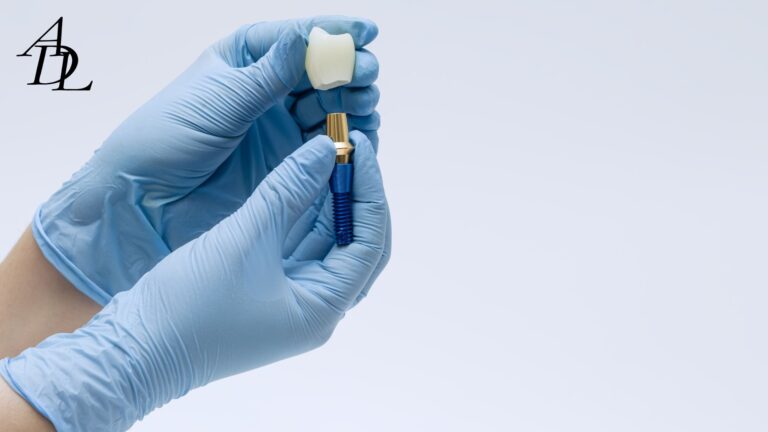
A hybrid abutment crown is a monolithic ceramic restoration (zirconia or lithium disilicate) luted extraorally to a prefabricated ti-base abutment, and the bonded unit is then screw-retained to the implant. allshape.ch
Why clinicians choose it
- Screw retrievability without cement at the tissue level
- Excellent esthetics and occlusal morphology (no access hole if ASC not used; access sealed with composite when present)
- CAD/CAM accuracy; simple delivery with torque and re-torque
- The titanium implant connection stays pristine; the ceramic handles form and shade
Materials most often used
- Zirconia for strength and wear resistance (posterior, parafunction, or thin interocclusal space)
- Lithium disilicate hybrid abutment crown for high esthetics (anterior), when you can respect minimal thickness and use the correct bonding protocol (HF + silane on the ceramic, MDP-based primer for titanium) Perio Implant Chicago
Bonding Science in Brief: Why Protocols Matter
The adhesive interface between ceramic and titanium is the weak link if you skip or dilute steps. Robust, durable bonds rely on:
- Micromechanical retention created by air-particle abrasion (grit-blasting) of the bonding surfaces
- Chemical coupling:
- Zirconia and titanium are metal-oxide substrates—standard silane doesn’t bond. You need phosphate monomers (10-MDP) in a primer or universal adhesive to create durable bonds.
- Silica-based ceramics (e.g., e.max) need HF etch + silane for predictable micromechanical and chemical coupling.
Laboratory and clinical research consistently shows that air abrasion + MDP + resin cement combinations outperform “no-treatment” or silane-only approaches on zirconia/titanium assemblies. Nature
The Ti-Base Bonding Protocol (Step-by-Step)
The safest way to standardize is to follow the prosthesis and cement manufacturers’ IFUs. Below is a consolidated, evidence-aligned protocol that maps to multiple vendor recommendations.
1) Pre-bond set-up
- Mount the ti-base abutment on an analog (or manufacturer’s holder) to protect the implant-connection geometry during blasting.
- Plug the screw channel (PTFE/utility wax) so cement cannot flow into threads.
2) Surface treatment—titanium side
- Air-particle abrasion: 50 μm Al₂O₃ at 1–2 bar (≈15–30 psi) for ~10 seconds at ~10 mm; avoid the connection interface. Rinse/steam clean; dry. Many IFUs and studies converge around this range (some use 2–2.5 bar). Nobel Biocare
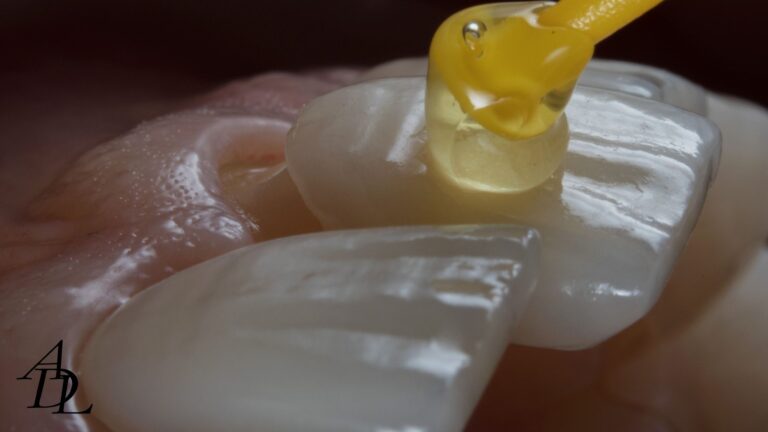
- Apply an MDP-containing primer or universal adhesive to the Ti bonding surface; air-thin/dry per IFU. Kuraray Dental
3) Surface treatment—ceramic side
- Zirconia: air-abrade (50 μm Al₂O₃), clean, then apply an MDP primer or universal with phosphate monomers; air-thin/dry. Do not HF-etch zirconia.
- Lithium disilicate (e.max): HF etch (per IFU, commonly ~20 s for e.max CAD), rinse and dry, apply silane (per IFU), then an adhesive/universal as indicated. Do not sandblast e.max unless the IFU specifically allows; most protocols rely on HF + silane for micromechanics and chemistry. Cdocs
4) Cementation (extraoral)
- Use a resin cement for ti-base validated for hybrid abutments (e.g., Multilink Hybrid Abutment, PANAVIA families, or a 10-MDP compatible universal resin cement). Seat with steady pressure, remove excess at gel phase, then full cure extraorally as recommended. Ivodent
5) Clean-up and finishing
- Remove the channel plug, clear residual cement, and confirm no resin remains in threads.
- Finish/polish margins. Store or deliver per plan.
6) Delivery
- Seat the ti-base crown and torque the screw to the manufacturer-specified value (varies by system/screw). After 5–10 minutes, re-torque to counter the settling effect and reduce the risk of loosening. Seal the access with PTFE + composite.
Why these steps matter: Peer-reviewed and in-vitro data indicate that air abrasion of the titanium base and ceramic, MDP chemistry on metal-oxides, and a compatible resin cement significantly improve bond strength and durability for hybrid abutment assemblies.
Sandblasting Parameters for Ti-Bases (Without Guesswork)
Evidence-anchored starting points
- Media/size: 50 μm Al₂O₃ (ubiquitous in IFUs)
- Pressure: 1–2 bar (≈15–30 psi) is widely recommended; some studies used 2.5 bar—stay within your implant/ti-base IFU to avoid altering the connection geometry.
- Time/Distance: ~10 s at ~10 mm, sweeping uniformly; avoid hitting the Morse-taper or anti-rotation features. TRICARE San Diego
Tip: Always use a holder or analog so the implant connection is shielded during blasting. Steam clean after blasting, then prime (MDP) just before cementation.
Which Resin Cement for a Ti-Base?
Three common directions (all validated in literature/IFUs)
- Dedicated hybrid-abutment cement (e.g., Multilink Hybrid Abutment): designed for extraoral luting of ceramic to titanium; pairs with Monobond Plus (universal primer) for both substrates.
- MDP-based adhesive systems (e.g., PANAVIA lines): combine primer/adhesive chemistry that couples to metal-oxides and zirconia.
- Universal resin cements with appropriate pretreatment (MDP primer for zirconia/Ti; silane for e.max): e.g., RelyX Universal when used as directed for the restoration material. 3M Multimedia
Across comparative studies, MDP-containing primers/cements consistently improve bonding to zirconia and titanium; self-adhesive cements without phosphate monomers tend to underperform.
Ti-Base Height & Geometry: Designing for Retention
Does abutment height matter?
Yes. Multiple studies report that increasing ti-base height beyond ~3.5–4 mm improves pull-off retention for zirconia hybrid crowns. Gains plateau between ~4.5–5.5 mm in some datasets, but the direction is clear: more height = more retention (when occlusal space allows).
What about material choice and offset positioning?
Data also suggest crown material and offset conditions influence retention; both zirconia and lithium disilicate hybrid abutment crowns can achieve strong retention when the bonding protocol is respected and ti-base height is adequate.
Geometry nuance
Emerging work shows abutment macro-geometry (e.g., additional axial walls, retentive features, hex profiles) can further increase retention on short abutments—useful when interocclusal space is limited.
Preventing Screw Loosening in Implant Crowns
The three most impactful habits
- Torque and Re-torque: Apply the manufacturer’s torque with a calibrated driver; re-torque after 5–10 minutes to compensate for the settling effect and increase preload stability.
- Keep the screw clean and dry: Seal the channel with PTFE during extraoral bonding; remove it before delivery, torque, then refill with PTFE + composite after final torque. This protects the screw head and facilitates serviceability.
- Use the correct screw/driver and check occlusion: Off-axis contacts and heavy excursive interferences are frequent culprits in recurrent loosening. Literature places early loosening risk in the single-digit to low-teens percent without preventive habits; re-torque reduces that risk.
Protocol Variations by Material
Zirconia hybrid abutment crown (posterior workhorse)
- Zirconia intaglio: air-abrade + MDP primer
- Ti-base: air-abrade + MDP primer
- Cement: MDP-compatible resin cement; extraoral cure per IFU
- Why: Metal-oxide on both sides—MDP chemistry is essential; sandblasting raises micromechanical retention and boosts bond strength.
Lithium disilicate hybrid abutment crown (esthetic zone)
- e.max intaglio: HF etch (per IFU) + silane; avoid sandblasting unless permitted
- Ti-base: air-abrade + MDP primer
- Cement: Hybrid-abutment resin cement or adhesive cement with proper pretreatments
- Why: Silica-based ceramic bonds best via HF + silane; titanium/zr require phosphate monomers.
Accuracy, Strength, and Longevity—What the Data Say
- Bonding to Ti/zr: In-vitro studies comparing protocols consistently favor air abrasion + MDP + resin cement, and several show extraoral/self-curing cements achieving high, durable bond strengths.
- Sandblasting effect: Reviews and experiments report 50 μm Al₂O₃ abrasion at ~1–2 bar increases retention; some models used 2.5 bar but IFUs commonly limit to ≤2 bar on Ti-bases.
- Ti-base height: Raising height from 3.5 mm to 4.5–5.5 mm significantly increases retention, with diminishing returns past ~4.5 mm.
- Clinical performance: Prospective data on monolithic lithium disilicate hybrid abutment crowns show encouraging survival/complication rates over multiple years when protocols are respected.
Common Pitfalls (and How to Avoid Them)
1) Skipping MDP on zirconia or titanium
Fix: Always use an MDP primer/universal after air abrasion on zirconia and Ti. Silane alone won’t bond to these oxides.
2) Over-blasting the connection
Fix: Use an analog/holder; keep the spray on the bonding cylinder only; follow 50 μm, 1–2 bar unless your IFU says otherwise.
3) Cement in the screw channel
Fix: Block out with PTFE or wax before cementation; after bonding, remove blockout, clean threads, then torque/re-torque and reseal.
4) Short ti-base with tall ceramic walls
Fix: If space allows, select a taller ti-base (≥4.5 mm). If not, consider a geometry with additional axial walls/retentive features and be perfectionist about surface treatments.
5) No re-torque
Fix: Re-torque at 5–10 minutes—this single habit reduces loosening by countering preload loss from settling.
Chairside Checklist: Hybrid Abutment Crown on a Ti-Base
- Verify implant system, platform, and screw.
- Inspect the ti-base abutment; mount on analog/holder.
- Air-abrade (50 μm Al₂O₃, 1–2 bar; ~10 s) Ti and zirconia (skip on e.max); clean and dry.
- Prime: MDP on Ti and zirconia; silane on e.max; air-thin/dry.
- Resin cement extraorally; clean excess at gel; full cure per IFU.
- Deliver: torque to spec; re-torque after 5–10 minutes; PTFE + composite fill.
Real-World Scenarios
Posterior molar with limited interocclusal space
- Choice: Zirconia hybrid abutment crown on a tall ti-base abutment
- Why: Strength + retention; MDP-based protocol; re-torque to protect preload.
Maxillary lateral incisor (high esthetic demand)
- Choice: Lithium disilicate hybrid abutment crown on a Ti-base
- Protocol: HF + silane for e.max; MDP on Ti; adhesive cement; confirm emergence and tissue pressure before final torque.
Recurrent screw loosening after several months
- Audit: Verify torque driver, adopt re-torque at 5–10 minutes, check occlusion, ensure the screw channel is sealed with PTFE + composite and that no cement compromised the threads.
How Associated Dental Lab Makes This Easy
- Digital intake: Upload intraoral scans and photos; we design and guide material/abutment choices.
- All in Los Angeles: Rapid communication and local pickups/repairs help maintain momentum for time-sensitive cases.
- Implant fluency: Our technicians routinely prepare zirconia and lithium disilicate hybrid abutment crowns for major systems and will annotate the case with blasting pressures, primers, and cements used—so your records are complete.
Frequently Asked Questions (FAQ)
1) What is the best ti-base bonding protocol for zirconia?
Air-abrade both zirconia and the ti-base abutment, apply an MDP-containing primer/universal, then lute with a compatible resin cement for ti-base. Avoid HF on zirconia; re-torque at 5–10 minutes during delivery.
2) How do I bond zirconia to titanium (MDP primer) correctly?
Create micromechanical retention (50 μm Al₂O₃, ~1–2 bar), clean, then use an MDP primer/adhesive on both zirconia and titanium before resin cementation. Phosphate monomers (10-MDP) are crucial for durable oxide bonding.
3) What sandblasting parameters ti-base should I use?
Most IFUs recommend 50 μm Al₂O₃ at ≤2 bar for ~10 s; some studies tested ~2.5 bar. Protect the connection with an analog/holder and stay within the manufacturer’s limits.
4) Which resin cement for ti-base performs well?
Validated choices include Multilink Hybrid Abutment, PANAVIA (MDP-based), and universal resin cements used with proper pretreatment (MDP for zirconia/Ti; silane for e.max). Follow IFUs for working/curing times.
5) Does ti-base height retention really change outcomes?
Yes. Studies show increasing ti-base height above ~3.5–4 mm improves retention of zirconia restorations; 4.5–5.5 mm often performs better than shorter bases when space allows.
6) How do I prevent screw loosening on an implant crown?
Torque with a calibrated driver to the manufacturer’s spec and re-torque after 5–10 minutes. Manage occlusion and seal the screw channel with PTFE before composite fill.
7) Is a lithium disilicate hybrid abutment crown reliable long-term?
Clinical data show promising survival when HF + silane pretreatment, proper adhesive cementation, and correct torque routines are followed. Case selection (thickness, occlusion) remains critical.
Conclusion
A hybrid abutment crown on a ti-base abutment (ti-base crown) can be one of the most predictable, efficient ways to restore single implants—if the bonding and assembly details are done right. Treat zirconia and titanium as metal-oxide substrates: air-abrade, use MDP chemistry, and cement with a compatible resin. For lithium disilicate hybrid abutment crowns, rely on HF + silane for the ceramic and MDP for the Ti-base. Respect sandblasting parameters (50 μm, ≤2 bar), choose the right resin cement, maximize ti-base height when space allows, and always re-torque after 5–10 minutes to safeguard preload. Do these consistently, and you’ll see fewer debonds, fewer loose screws, and faster, drama-free seats.
About Associated Dental Lab
Associated Dental Lab is a Dentists’ trusted Full-Service Dental Lab in Los Angeles, “Crafting Smiles since 1962.” We support digital submissions, offer collaborative case planning, and provide reliable turnarounds—plus local pickups and repairs to keep your day running smoothly. Send your next hybrid abutment case and we’ll help you select the ideal material, ti-base bonding protocol, and finishing steps for predictable results.