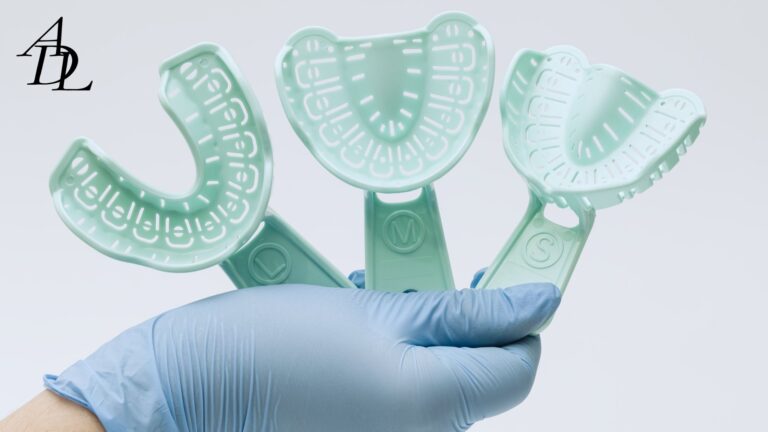
If your goal is to stop cracked enamel, flattened cusps, and morning jaw fatigue, the appliance you prescribe matters. But so does the material. Amid today’s night guard types—classic hard acrylic, dual-laminate hard/soft night guard (a rigid shell fused to a soft liner), and the emerging 3D printed night guard—the right choice balances comfort, durability, and adjustability while supporting your bruxism splint design and occlusal scheme. Evidence reviews show occlusal guards protect teeth and reduce symptoms for many patients, but results depend on thoughtful material selection and a precise fit. Hard, full-arch Michigan-style splints remain the benchmark for adjustability and predictable contacts, while soft or hybrid appliances may score higher on initial comfort—particularly in myalgic or sensitive patients. PMC
A practical complication: newer printable resins now let labs deliver thin, precise splints quickly. Early in-vitro data suggest printed materials can approach milled devices in wear performance, though some studies still favor milled in flexural properties—so the “printed vs milled” question is less about hype and more about resin choice, print parameters, and finishing. ScienceDirect
The Clinical Jobs a Night Guard Must Do
Protect teeth and restorations
- Create a sacrificial, smooth surface that absorbs wear instead of enamel or ceramic.
- Stabilize contacts to minimize microtrauma from grinding episodes.
Deprogram or redistribute forces (when indicated)
- A Michigan-style flat plane with shallow anterior guidance can reduce posterior interferences, decreasing elevator muscle activity for some patients. Decisions in Dentistry
Stay comfortable and adjustable
- Comfort promotes adherence; adjustability lets you refine contacts and manage changes over time.
- The CDT coding treats occlusal guard materials in three categories—hard, soft, and dual-laminate—which mirrors how most insurance and documentation expect you to think about these devices. Ada
Night Guard Types at a Glance
Hard acrylic (classic Michigan splint)
- Material: PMMA or similar rigid polymer.
- Best for: Maximal adjustability, precise occlusion, longevity, and when you’ll make occlusal refinements over time (e.g., full-arch Michigan splint vs soft).
- Considerations: Feels firm; initial adaptation can be slower in highly sensitive patients.
Hard/soft (dual-laminate)
- Material: Rigid outer shell (often PETG/rigid copolyester) bonded to a soft EVA-type liner.
- Best for: Greater comfort on insertion, retention on short clinical crowns, and patients who prefer some cushion while still maintaining a tunable occlusal surface.
- Considerations: The soft liner is not as polishable; long-term odor uptake is possible if hygiene is lax. Adjustability is good but not as crisp as hard acrylic.
3D-printed guards
- Material: Printable biocompatible splint resins (rigid or “flex” variants) cured post-print.
- Best for: Rapid turnaround, consistent thickness, reproducible replacements from saved STL files, and thin designs in limited interocclusal space.
- Considerations: Wear and night guard durability wear depend on resin and post-cure; current data show improving performance, with some wear differences vs milled.
Hard vs Soft Night Guard: What the Evidence and Experience Say
Hard (flat-plane Michigan) vs soft
- Adjustability: Hard acrylic wins. You can dial in centric stops and low-incline anterior guidance, then re-polish. This precision is essential for a true “Michigan splint.”
- Comfort: Soft or dual-laminate often wins on day one; some myalgic patients report less tenderness with a cushioned liner. Evidence is mixed across TMD/bruxism outcomes; device selection should be individualized. BioMed Central
- Durability: Hard acrylic surfaces resist grooving and can be re-polished; soft liners can compress over time. For heavy grinders, hard or a rigid printed resin typically outlasts purely soft appliances.
- Hygiene: Hard acrylic is the easiest to keep glossy and odor-free with routine cleaning. Soft liners can harbor plaque if neglected.
Where a hard/soft night guard fits
- Retention on sensitive dentitions: The soft liner can improve comfort and retention on abraded enamel or short teeth.
- Behavioral acceptance: For patients who reject hard splints, a dual-laminate may be the “bridge” that ensures nightly wear.
- Trade-offs: Occlusal refinements are possible but less glassy than hard acrylic; consider a rigid printed or milled hard if heavy occlusal adjustments are anticipated.
Occlusal Guard Materials: What They’re Made Of—and Why It Matters
PMMA and rigid copolymers (hard guards)
- Highly polishable, dimensionally stable, and easy to spot-adjust.
- Ideal for a Michigan-style flat plane with controlled anterior guidance, often the reference standard for bruxism splint design.
EVA and dual-laminate stacks (hard/soft)
- Soft inner layer cushions, rigid outer shell distributes load.
- Good for comfort and grip; liner wear and long-term odor are the trade-offs if hygiene is poor.
Printable splint resins (3D printed night guard)
- Rigid “firm” and slightly resilient “flex” resins exist; mechanical properties vary by brand, curing, and storage (hydration/temperature can alter properties). Recent studies evaluate night guard durability wear and preservation effects—important if patients store appliances in different conditions.
Design Choices That Matter More Than Brand Names
Arch and coverage
- Full-arch devices distribute forces and are easier to calibrate (especially for Michigan splint vs soft debates). Partial-arch guards can increase tooth migration risk and complicate force patterns; use with caution per payer and policy guidance. UHC Provider
Guidance scheme
- For many bruxers, a flat plane with shallow anterior guidance (light canine guidance or shared group function) reduces posterior interferences that drive elevator activity. Confirm in the mouth and re-polish marks until smooth.
Thickness
- Too thin: fracture risk; too thick: speech and adaptation issues. Printed guards can hold a uniform 1.5–2.0 mm across the arch when space is limited; hard acrylic typically ranges 2.0–3.0 mm in posterior load zones. Material dictates minimums—follow IFUs and your lab’s guidance.
Finish and polish
- A high-gloss surface attracts less plaque and feels “invisible” during wear. Hard acrylics and certain printed resins polish to a mirror; soft liners need more hygiene coaching.
Indications Matrix: Match Patient Profile to Night Guard Type
Heavy grinder with ceramic restorations
- Choose: Hard acrylic (or rigid printed) full-arch.
- Why: Best for refined occlusion, re-polishability, and lower grooving.
Myofascial pain with crown sensitivity
- Choose: Hard/soft night guard to start; reassess at 6–12 weeks.
- Why: Liner comfort may improve adherence; convert to fully hard if heavy wear tracks appear.
Limited interocclusal space
- Choose: Thin, rigid 3D printed night guard (validated resin) or carefully milled hard acrylic with minimal thickness.
- Why: Printed devices offer consistent thin sections with adequate rigidity when the resin is appropriate.
Fast turnaround or frequent replacements
- Choose: 3D printed guard with archived STL.
- Why: Reprints are fast; patients prone to loss/damage benefit from easy duplication.
Parafunction plus suspected OSA
- Note: A standard guard is not therapy for OSA; screen and refer. If proceeding for tooth protection, maintain airway space and avoid mandibular repositioning claims unless using a device meant for that purpose.
Hard vs Soft Night Guard: Coding, Documentation, and Expectations
- CDT codes:
- D9944 Occlusal guard—hard appliance, full arch
- D9945 Occlusal guard—soft appliance, full arch
- D9946 Occlusal guard—hard appliance, partial arch
- Dual-laminate (hard/soft) is typically documented per ADA’s guide for devices with both components. Clear documentation accelerates adjudication and reduces back-and-forth.
- Policy language: Most payer policies define guards as protective (not curative) for bruxism; they’re not TMD therapy per se—manage patient expectations accordingly.
3D Printed Night Guard: What the Literature Says (So Far)
- Wear resistance: Newer studies compare flexible and rigid printed materials to milled and conventional guards, with several reporting competitive wear in vitro—though not every resin performs equally. Resin brand, print resolution, orientation, and post-cure are critical.
- Flexural strength: Some reviews still find milled devices superior in flexural properties; clinicians should select validated resins and respect minimum thicknesses.
- Storage effects: Hydration and temperature can change mechanical behavior; remind patients to follow storage instructions (e.g., case vs water).
Patient Communication: What to Promise—and Not
You can promise
- Protection from wear: Guards provide a sacrificial surface that protects teeth and restorations.
- A path to comfort: Many patients report reduced morning tightness or soreness; a personalized fit and smooth contacts matter.
- Refinements over time: Especially with hard acrylic, you can fine-tune contacts as muscles adapt.
You should not promise
- A cure for bruxism or TMD: The evidence base is mixed for symptom reduction across all devices; guards are protective and supportive, not curative. Nature
- One size fits all: Hard vs soft night guard choices depend on dentition, restorations, symptoms, and adherence.
Chairside Workflow: Delivering a Guard Patients Actually Wear
1) Records & design
- Accurate models/scans; confirm vertical space.
- Define bruxism splint design: full-arch coverage, shallow anterior guidance if indicated, smooth excursions.
2) Seat and primary adjustment
- Verify full seating, refine contacts to light, broad centric stops, and eliminate posterior interferences in excursions.
- Polish to a high gloss.
3) Hygiene coaching
- Daily brushing with non-abrasive cleanser; weekly deep clean in non-alcoholic solutions.
- For soft liners, emphasize drying and case storage to prevent odor.
4) Follow-up
- Recheck at two weeks, then at recall. Watch for wear tracks in soft liners and mid-arch grooves in hard guards. Switch materials if usage patterns demand.
Troubleshooting: Symptom → Likely Cause → Fix
- Morning joint soreness persists → Posterior interferences or over-steep guidance → Re-polish to shallower, smooth paths; reassess arch choice.
- Guard feels “too tight” on insertion → Undercuts or soft-liner over-retention → Relieve internal undercuts; consider dual-laminate.
- Grooves cutting into hard guard → Severe bruxism → Increase thickness locally or transition to rigid printed/milled with greater occlusal bulk; schedule earlier follow-ups.
- Odor with soft liner → Inadequate drying → Hygienic reset: daily brushing + timed airing; if persistent, consider hard/rigid alternative.
Real-World Scenarios
Case A: Full-coverage crowns with daytime clenching
- Plan: Hard acrylic Michigan-style guard, full arch, shallow guidance.
- Why: Best adjustability and polishability protect high-value ceramics.
Case B: Myalgic patient rejecting rigid guards
- Plan: Start with hard/soft night guard; schedule a 6-week review.
- Why: Comfort improves adherence; if rapid wear appears, convert to hard or rigid printed.
Case C: Minimal vertical space after extensive prosthetics
- Plan: Thin, rigid 3D printed night guard validated at 1.5–2.0 mm with robust post-cure; careful occlusal mapping.
- Why: Maintains protection without encroaching on speech or comfort.
FAQs
1) Which night guard types last the longest?
Hard acrylic and rigid printed guards generally show better long-term night guard durability wear than purely soft appliances, assuming proper thickness and polish. Material choice and patient habits both matter.
2) Is a hard vs soft night guard better for jaw pain?
It depends. Some studies report symptom gains with hard and soft devices, but evidence is mixed overall. Start with the material your patient will actually wear; hard offers superior adjustability, soft may win early comfort.
3) When is a hard/soft night guard preferable?
When you need a balance of comfort and control—e.g., sensitive dentitions or first-time guard users who reject rigid appliances. Expect more maintenance on the liner.
4) Are 3D printed night guards as strong as milled?
They’re getting close. Wear resistance looks promising in recent in-vitro work, but some reviews still give milled the flexural-strength edge. Choose validated resins and follow post-cure/storage instructions.
5) What’s the difference between a Michigan splint vs soft guard?
A Michigan splint is a rigid, full-arch flat-plane appliance designed for precise, adjustable occlusion; a soft guard cushions but isn’t as tuneable. Many clinicians start with hard for adjustability.
6) How should I document the appliance for insurance?
Use CDT categories: hard (full arch), soft (full arch), or hard (partial arch). Dual-laminate devices are documented per ADA’s guidance for “hard and soft components.”
7) Do occlusal guards treat TMD?
They protect and can reduce symptoms for many, but payer policies and reviews emphasize they are protective devices, not definitive TMD therapy. Manage expectations and co-manage with PT, behavior change, or TMD referral when appropriate.
Conclusion
Choosing between night guard types isn’t a popularity contest; it’s a clinical calculus. Hard acrylic (or rigid printed) shines when you demand exact occlusion, polishability, and longevity—classic Michigan-style principles. Hard vs soft night guard decisions often hinge on comfort and compliance: a hard/soft night guard can be an excellent on-ramp for sensitive patients, while rigid designs remain the standard for heavy bruxers and prosthetically complex mouths. Meanwhile, 3D printed night guard options deliver speed, consistent thickness, and easy remakes—provided you select validated resins and honor finishing/post-cure protocols. Pair material science with a smooth occlusal scheme, glossy finishes, and real follow-ups, and you’ll transform “I hate wearing a guard” into nightly adherence—and fewer fractures in your restorative work.
Associated Dental Lab is a dentists’ trusted Full-Service Dental Lab in Los Angeles. We fabricate hard acrylic, hard/soft, and printed occlusal guards; accept digital scans or impressions; and offer local pickup and prepaid shipping. Our technicians help you match occlusal guard materials to the patient, optimize bruxism splint design, and set realistic expectations for wear and maintenance. Send your next guard case to Associated Dental Lab and keep your patients (and their ceramics) protected.