Every practice that seats crowns and bridges eventually faces the same moment: you’ve adjusted occlusion, refined a contact, or smoothed a rough edge—and now you have to decide what finish goes back into the mouth. Do you polish chairside and call it done? Or do you send it back for glaze firing ceramics to restore shine?
This is not just an esthetic decision. It impacts wear on opposing teeth, plaque retention, patient comfort (“my tongue feels it”), and potentially the long-term longevity of ceramic restorations. The controversy is real because both finishing methods can look good clinically, and studies aren’t identical in methodology. But a consistent theme shows up across bench research and reviews: for monolithic zirconia in particular, a properly executed polish often produces a smoother surface and can be more “antagonist-friendly” than a glaze layer—especially after occlusal adjustments. PMC
This guide gives you a practical, lab-informed framework—centered on a simple bench test mindset—to choose between polishing and glazing after adjustments. You’ll learn how “surface roughness” actually relates to enamel wear, when glaze makes sense, when it becomes a trap, and what protocols reduce callbacks.
The real question behind “polish vs glaze”
Most clinicians are not truly asking whether a restoration should be polished or glazed “in general.” They are asking:
- After I adjust it, which surface will be smoother and stay that way?
- Which surface causes less wear on opposing teeth?
- Which is more durable in the mouth (does the finish persist)?
- Which is more practical for my workflow and patient expectations?
Bench studies often measure surface texture using profilometry (values like Ra), then simulate chewing to measure wear of enamel and restoration material. While bench tests don’t perfectly replicate the oral environment, they are useful for comparing surface treatments under controlled conditions. The JPD
Why adjustments change everything
A crown that arrives highly polished or glazed from the lab doesn’t necessarily stay that way once you adjust it. Adjustments can create:
- New grooves from diamonds or carbide instruments
- Micro-chipping at contact points
- A roughened occlusal area that can act like sandpaper
- Increased plaque-retentive texture at margins or embrasures
That’s why adjusted crown polishing and finishing strategy is the key determinant—more than “what the lab delivered.”
A 2024 paper focused on chairside adjustment notes that adjusting zirconia can compromise properties if not followed by adequate finishing/polishing, reinforcing the importance of a defined post-adjustment protocol. Taylor & Francis Online
The science in plain language: roughness, glaze layers, and enamel wear
Zirconia surface roughness and why it matters
Surface roughness matters for three reasons:
- Antagonist wear: rough surfaces can abrade enamel more aggressively.
- Biofilm and stain: rough surfaces retain plaque and discoloration more easily.
- Comfort: patients notice texture on the tongue and cheeks.
A key outcome across multiple studies is that polished zirconia often produces less enamel wear than glazed zirconia, and sometimes the polished surface ends up smoother than the glazed surface—especially after occlusal adjustment and time in function.
Why glaze can be smooth today but rough tomorrow
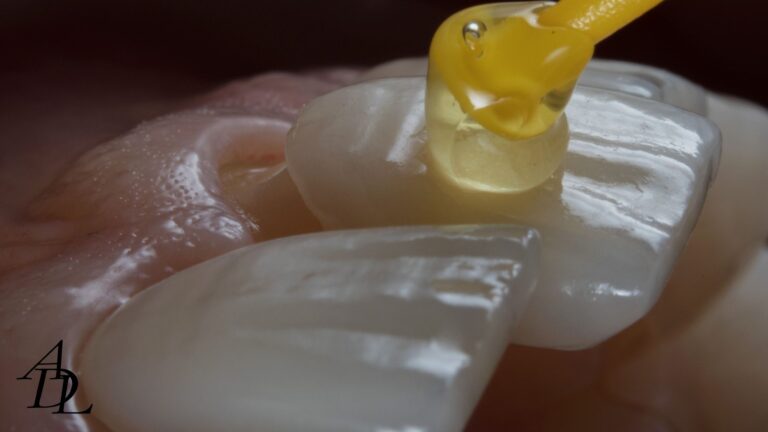
Glaze is essentially a thin glassy layer applied to the ceramic and fired. It can look beautiful immediately after firing—but it is still a layer that can:
- Wear off unevenly
- Expose the underlying adjusted ceramic texture
- Crack or micro-fracture under occlusal load
- Leave a patchwork finish (glaze islands + rough ceramic) that increases wear on opposing teeth
This “wear-through” explanation is often offered as a practical reason why glaze vs polish ceramics becomes a longevity problem: a high-gloss glaze at delivery may not be the surface the patient is chewing on months later.
Bench and review data also frequently suggest that glazing should be used selectively, and that if glaze is desired for esthetics, polishing first (then glazing) can be preferable.
Polishing is not “just making it shiny”
Polishing is a controlled sequence that reduces scratches stepwise, replacing deep grooves with finer ones until the surface is smooth and glossy. The benefits are:
- Lower or comparable roughness to glazed surfaces
- More stable finish (no glaze layer to wear off)
- Chairside control after adjustments
That’s why in the polishing vs glazing zirconia debate, the winning variable is often “quality of polish,” not just the label “polished.”
What the evidence says: polishing vs glazing zirconia and enamel wear
Bench-test landmark: polished zirconia vs glazed zirconia
One of the most cited studies in this space (Janyavula et al., Journal of Prosthetic Dentistry, 2013) compared wear and roughness across polished, glazed, and polished-then-reglazed zirconia against enamel antagonists. Within study limits, the authors reported that polished zirconia was more wear-friendly to opposing enamel than glazed zirconia, and that surface roughness helped predict antagonist wear. PubMed
This paper heavily influenced clinical thinking: if you must glaze for esthetics, polish first, because polishing can reduce the roughness and potential wear of the final surface.
Systematic reviews: overall direction
A 2022 systematic review evaluating wear behavior of polished and glazed feldspathic and zirconia crowns highlighted ongoing controversy but synthesized evidence across studies, underscoring that surface finishing method affects antagonist wear outcomes.
A 2022 systematic review/meta-analysis on enamel wear against monolithic zirconia reported that polished monolithic zirconia caused less enamel wear than glazed surfaces in the included evidence set.
A 2024 review on antagonist enamel wear similarly reported a trend where polished surfaces exhibited less enamel wear than glazed surfaces, with heterogeneity limiting meta-analysis.
Taken together, these sources support a practical takeaway: for monolithic zirconia, when you adjust occlusion, polish is often the safer default to minimize wear on opposing teeth, assuming you polish properly.
Nuance: not every study finds a dramatic difference
Not every clinical study shows large differences between polished and glazed surfaces. A 2024 two-year clinical evaluation of enamel wear antagonistic to glazed vs polished monolithic zirconia endocrowns reported comparable enamel wear over follow-up.
This doesn’t invalidate the bench data—it highlights that oral variables (diet, parafunction, saliva, occlusion scheme, polishing quality, glaze type, and patient enamel) can narrow or widen differences.
So the best clinical approach is to focus on what you can control: consistent finishing protocols and verification.
The “Bench Test” approach for clinicians: how to decide at the chair
Think of your post-adjustment workflow like a mini bench test, using fast chairside checks that correlate with the lab’s roughness/wear logic.
Bench Test 1: The “Scratch Pattern” Test (visual + magnification)
After adjustment and initial smoothing:
- Dry the crown surface
- Use loupes or an intraoral camera
- Look for directional grooves (diamond bur striations)
If you can see clear grooves, you should assume elevated zirconia surface roughness and higher risk of antagonist wear—meaning polishing is required.
Bench Test 2: The “Explorer Drag” Test (tactile)
Gently pull an explorer across the adjusted surface:
- Smooth glide = finish is likely acceptable
- Catch/drag = remaining texture; continue polishing sequence
This is crude compared to profilometry, but it’s a good clinical proxy.
Bench Test 3: The “Floss Snap + Squeak” Test (interproximal)
After adjusting contact points, floss should:
- Snap through with moderate resistance
- Not shred
- Not “squeak” aggressively (often indicates micro-roughness)
If floss shreds, polishing the contact is not optional.
Bench Test 4: The “Shine Consistency” Test (light reflection)
Under operatory light, move the mirror angle:
- A uniform reflection band suggests a uniform finish
- Patchy shine often indicates mixed roughness (some areas polished, others still scratched)
Bench Test 5: The “Patient Tongue” Test (real-world feedback)
Before cementation (or for screw-retained provisionals), ask:
- “Does your tongue feel any roughness on the back or chewing surface?”
Patients are surprisingly sensitive. If they feel it now, it will bother them later—polish.
When to polish vs when to glaze: a decision framework
Default recommendation: polish after adjustments (especially zirconia)
If you are adjusting monolithic zirconia, the evidence trend and practical durability argument generally favors polishing as the default—polishing vs glazing zirconia is usually won by polishing when the polish is done correctly. Ovid
Choose polishing when:
- You adjusted occlusion on zirconia or other ceramics
- You want a durable finish that won’t wear off like a glaze layer
- You want to reduce wear on opposing teeth
- You have appropriate chairside polishing kits and a standardized sequence
Choose glaze firing ceramics when:
- High esthetic demand (e.g., anterior characterization)
- You need stain/glaze effects to match adjacent teeth
- The lab can re-fire and you can manage turnaround time
- You’re willing to accept that glaze may wear and require maintenance
A recurring suggestion in published discussions is: if glazing is needed, polishing first and then glazing can be preferable, because polishing reduces the underlying roughness before glaze application.
The “hybrid” approach: polish, then selectively glaze
For many practices, the best real-world compromise in the glaze vs polish ceramics debate is:
- Polish all functional occlusal surfaces after adjustment
- If esthetics requires, send for glaze on non-functional zones or perform lab re-glazing where appropriate
- Avoid leaving an adjusted surface only “smoothed” but not polished
Chairside polishing kits: what matters more than brand
You’ll see many commercial chairside polishing kits (zirconia systems, ceramic systems, universal kits). Brands differ, but successful outcomes share three characteristics:
- A true step sequence (coarse → medium → fine → high-gloss)
- Appropriate rpm and pressure (light pressure, keep moving)
- Adequate time (many failures happen because the clinician stops too early)
Manufacturer education pages and industry guidance emphasize that zirconia-specific polishers and diamonds are formulated for zirconia hardness and can achieve a high-gloss finish chairside, but the technique still matters. glidewelldental.com
A practical zirconia chairside polishing sequence (example framework)
- Adjustment with fine diamond (minimize deep grooves)
- Pre-polish (rubber polisher or diamond impregnated polisher)
- Fine polish/high-shine step
- Verify with the bench tests above
- Re-check occlusion and polish again if needed
Even if your kit claims “gloss in seconds,” treat that as marketing. For consistent outcomes and better longevity of ceramic restorations, assume you need a deliberate sequence.
Glaze firing ceramics: what it does well and where it can mislead
What glaze does well
- Enhances esthetic vitality and surface luster
- Helps unify appearance after staining
- Can reduce initial roughness if the substrate is already smooth
Where glaze becomes a trap after adjustments
- If you grind through glaze intraorally, you leave a roughened ceramic surface.
- If glaze wears unevenly, you create a mixed texture surface that can increase antagonist wear.
- If glaze is used to “hide” scratches without proper smoothing/polishing underneath, it may not last.
Recent research comparing glazing methods notes that polishing before glazing can be crucial to remove imperfections and reduce roughness prior to glaze application, supporting a “polish first” mindset even when glazing is planned.
Material-by-material: does the answer change for other ceramics?
Zirconia (monolithic zirconia)
Zirconia is where the data most often supports the “polish after adjustment” approach, with multiple sources reporting that polished zirconia can be smoother and cause less antagonist wear than glazed zirconia.
Clinical implications from classic work suggest avoiding glaze unless there is high esthetic demand; if glaze is required, polish then reglaze.
Lithium disilicate and feldspathic ceramics
For glass ceramics and porcelain, both polishing and glazing can be used, but the decision often leans more heavily on:
- Esthetics and shade integration
- Location and function
- Depth of adjustment and thickness of ceramic
- Ability to achieve a smooth polish chairside
Some studies and reviews include feldspathic and zirconia comparisons regarding antagonistic wear patterns with polishing vs glazing.
In practice: if you adjust a glazed porcelain surface, you should at minimum repolish to a high gloss or re-glaze, because leaving it rough is where wear risk increases.
Resin matrix ceramics / hybrid ceramics
These materials can polish very well chairside, and glaze behavior depends on the system. If you’re seating these frequently, standardize a protocol with your lab (or manufacturer IFUs) to avoid leaving a partially finished surface.
How to reduce wear on opposing teeth: practical, controllable levers
If your goal is reducing wear on opposing teeth, focus on what you can consistently control:
1) Finish quality in functional areas
- Occlusal contacts and excursions should be on polished zones whenever possible
- Avoid “contact on a scratch”
2) Occlusion scheme and adjustment discipline
- Centralize contacts
- Avoid sharp cusp tips or excursive interferences
- Polish after any adjustment because a rough adjustment is a wear accelerator
3) Patient-specific risk factors
- Bruxism/parafunction
- Existing enamel wear
- Acid erosion (softened enamel wears more easily)
- Diet habits
4) Follow-up
If you deliver a zirconia crown to a heavy bruxer, schedule a short follow-up to ensure there’s no new roughness, chipping, or occlusal changes.
Practical examples: what to do in real cases
Example 1: Posterior zirconia crown, occlusion adjusted chairside
Situation: You adjusted MIP and a minor excursive interference.
Best practice:
- Do not leave it “smooth-ish.”
- Perform a zirconia polishing sequence with your chairside polishing kits.
- Confirm with a shine consistency + explorer drag bench test.
Why: Polished zirconia has been shown in multiple sources to be favorable vs glazed for enamel wear and roughness trends.
Example 2: Anterior zirconia crown, esthetic glaze desired
Situation: A glazed/stained anterior zirconia restoration required minor lingual adjustment.
Best practice:
- Polish the adjusted functional zones thoroughly.
- If facial glaze characterization is needed, the lab can reglaze facial aspects while keeping functional surfaces polished.
Why: The “polish then glaze selectively” approach aligns with the idea that underlying smoothness improves the final result and may reduce antagonist wear.
Example 3: Porcelain veneer adjusted at incisal edge
Situation: You refined incisal edge length and created micro-scratches.
Best practice:
- Polish to a high gloss with porcelain-appropriate polishers.
- Consider reglazing if the esthetic requirements are high and you changed characterization.
Why: Leaving an adjusted porcelain edge rough increases plaque retention and can increase wear on opposing enamel.
A printable checklist: polishing vs glazing zirconia after adjustments
Chairside Post-Adjustment Checklist (Zirconia + ceramics)
- Confirm what material you adjusted (zirconia vs porcelain vs lithium disilicate).
- Reduce scratches with fine diamonds (minimize groove depth).
- Use a multi-step polishing sequence (coarse → fine → high shine).
- Run the bench tests:
- Visual scratch pattern under magnification
- Explorer drag
- Shine consistency
- Floss test for contacts
- Re-check occlusion and repolish any newly adjusted contacts.
- Decide on reglazing only if esthetics require it (and ideally polish first).
FAQ: Polishing vs Glazing After Adjustments
1) For polishing vs glazing zirconia, which is better after occlusal adjustment?
For many monolithic zirconia cases, evidence trends suggest a high-quality polish produces a smoother surface and may reduce enamel antagonist wear compared with leaving or reapplying glaze—especially when the restoration has been adjusted.
2) Does glaze vs polish ceramics affect wear on opposing teeth?
Yes. Multiple reviews and studies indicate surface finish can influence wear on opposing teeth, and polished zirconia surfaces often show less enamel wear than glazed zirconia in many bench and review findings.
3) Why does zirconia surface roughness increase after adjustments?
Diamond adjustments create grooves and micro-defects. If those scratches are not removed by a stepwise polish, the surface roughness remains elevated and can abrade enamel and collect plaque.
4) Are chairside polishing kits enough, or should I send it back for glaze firing ceramics?
Chairside polishing kits can be sufficient if you follow a true multi-step sequence and verify smoothness. Reglazing can be useful for high esthetics, but many clinicians still polish functional surfaces even when glaze is used for characterization.
5) If I reglaze, should I still polish first?
Often yes. Research and clinical guidance frequently suggest polishing before glazing can improve the final surface and reduce roughness under the glaze layer.
6) Does polishing vs glazing zirconia change the longevity of ceramic restorations?
Finishing affects plaque retention, surface stability, and antagonist wear—all factors that can influence perceived comfort and long-term performance. A durable polished finish can be advantageous because it doesn’t rely on a thin glaze layer that may wear off.
7) What’s the fastest way to verify adjusted crown polishing is adequate?
Use quick “bench tests”: inspect scratch patterns under magnification, feel for explorer drag, check consistent shine, and confirm smooth floss passage at adjusted contacts.
Conclusion
The debate over polishing vs glazing zirconia becomes much simpler when you view it through function and durability. Glaze can be beautiful at delivery, but it is still a layer that may wear, leaving a mixed texture that can increase wear on opposing teeth. A proper chairside polish—done with a real sequence, verified with simple bench tests, and focused on functional contacts—often produces a smoother and more stable surface. The balance of evidence and practical experience supports polishing as the default after occlusal adjustments for zirconia, while reserving glaze firing ceramics for high esthetic needs and, ideally, after a polish baseline.
If you standardize your finishing protocol, you don’t just improve feel and shine—you support the longevity of ceramic restorations and reduce remakes tied to roughness, antagonist wear, and patient discomfort.
About Associated Dental Lab
Associated Dental Lab is a dentists’ trusted full-service dental laboratory in Los Angeles, crafting solutions across Crown & Bridge, Implant Solutions, Removables, and guards—made locally with defined turnaround times for standard crown & bridge and larger cases. Their Crown & Bridge category includes zirconia crowns and zirconia bridges, and their workflows include finishing steps such as staining/glazing for zirconia where indicated. If you want fewer chairside surprises and better consistency from the lab to the operatory, contact Associated Dental Lab to become your practice’s trusted Full-Service Dental Lab partner.