Bonding failures rarely happen because “bonding doesn’t work.” They happen because the wrong surface treatment was used for the actual material in your hand—or because a correct protocol was derailed by a small, easy-to-miss detail: contaminated intaglio, over-etching, skipped silane dwell time, incorrect sandblasting pressure, or the wrong primer chemistry.
This is why a clear decision framework matters. If you can answer two questions—What is the restorative substrate? and Are you bonding (adhesive) or cementing (conventional)?—you can standardize a zirconia bonding protocol and a lithium disilicate bonding approach that predictably reduces debonds, remakes, and chairside drama.
This guide is written in a “lab integration” style: practical, step-based, and designed to be copied into your team’s clinical notes or cementation checklist. It includes a quick template you can keep at the operatory, plus deeper explanations so you understand the “why” behind each step.
Why surface treatment is the real “bond strength multiplier”
Adhesion to indirect restorations depends on two pillars:
- Micromechanical retention: creating surface texture (e.g., sandblasting zirconia) so resin can interlock.
- Chemical coupling: using the correct chemistry for the substrate (e.g., MDP primer for metal oxides like zirconia; silane for ceramics that contain silica).
Glass-ceramics (like lithium disilicate) and feldspathic porcelain are typically conditioned by HF etch lithium disilicate/porcelain + silane, because etching creates a micro-porous surface and silane couples resin to the silica-based ceramic network. Ivoclar
Zirconia is different. It’s a polycrystalline ceramic with metal-oxide behavior; HF doesn’t etch it effectively, so a zirconia bonding protocol relies on air abrasion + MDP primer (or an equivalent phosphate monomer system).
Hybrid ceramics and resin-nano ceramics can be the trickiest because their “best” approach depends on the manufacturer and the material’s structure—some behave closer to glass-ceramic, some closer to composite. That’s where a controlled template helps prevent guessing. Vivarep
Before you start: define the job (bond vs cement)
Bonding (adhesive luting) is usually indicated when:
- Short/over-tapered preparations
- Veneers, partial coverage, inlays/onlays
- Thin ceramics or high esthetic margins
- Resin-nano ceramic/hybrid ceramic that must be bonded (not conventionally cemented)
Conventional cementation (RMGI/self-adhesive) may be indicated when:
- Adequate retention/resistance form
- Zirconia crowns where bonding is optional (case-dependent)
- When moisture control is compromised and you’re not relying on adhesive retention
Many clinicians “bond everything” to simplify. That can work—if your zirconia bonding protocol and lithium disilicate bonding steps are correct and consistently executed. But it also raises the cost of small mistakes. This article assumes you are bonding when it benefits predictability, and cementing when it’s appropriate.
The golden rule: always follow IFUs (and why labs care)
For each ceramic family, the safest and most defensible baseline is:
- Identify the material category
- Follow the restoration manufacturer’s surface conditioning IFU
- Follow the primer/cement IFU
- Control contamination and handling
This isn’t legal boilerplate—it’s performance logic. Different ceramics tolerate different pressures, etchants, and dwell times. Ivoclar, 3M, VITA, and Kuraray all publish material-specific guidance because “one protocol for all ceramics” is the fastest path to variable outcomes. 3M Multimedia
The Chairside Decision Tree: Sandblast, Etch, or Prime?
Step 1: Identify the substrate (what are you actually holding?)
Use the lab slip, packaging, or the lab’s material callout. If you don’t know, don’t guess—message the lab before conditioning.
Common categories:
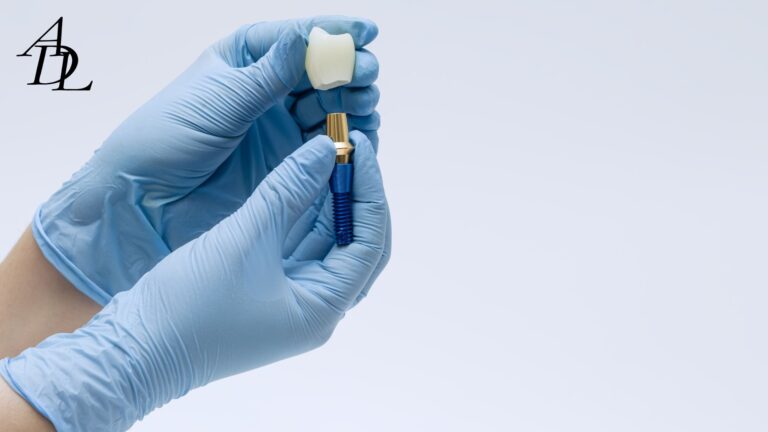
- Zirconia (Y-TZP): monolithic zirconia crowns/bridges; hybrid abutment crowns; implant crowns
- Lithium disilicate: e.g., IPS e.max CAD/Press (glass-ceramic)
- Feldspathic porcelain / leucite-reinforced: veneers, layered porcelain, some CAD blocks
- Hybrid ceramic: e.g., VITA ENAMIC (dual-network)
- Resin nano ceramic / composite CAD: e.g., Lava Ultimate (requires bonding, not HF etch) Jensen Dental
Step 2: Choose the conditioning pathway (the template)
Below is the practical “template” section you can use as your standard operating approach. It’s intentionally redundant, because repeatable bonding is repetitive.
The Bonding Template by Material
Zirconia bonding protocol (monolithic zirconia, zirconia frameworks, Ti-base zirconia)
What to use (high-level)
- Sandblast zirconia (air abrasion) + MDP primer + resin cement/adhesive
- Do not HF etch zirconia (it’s not a glass-ceramic)
Step-by-step zirconia bonding protocol
- Inspect the intaglio
- Confirm no glaze on the bonding surface (rare, but possible).
- Check for milling dust or residue.
- Air abrasion (sandblasting zirconia)
- Typical lab/clinical baseline: 50 µm Al₂O₃, moderate pressure, short duration, sweeping motion. Your lab may specify a narrower range depending on indication (especially implants). Associated Dental Lab
- Avoid aggressive blasting that can damage margins or alter implant interfaces.
- Clean
- Rinse thoroughly; dry.
- If the surface was contaminated (try-in saliva/blood), clean using a proven zirconia decontamination approach per your system or manufacturer guidance (labs commonly have preferred methods; the key is: don’t prime over contamination). Evidence and manufacturer guidance emphasize cleaning as part of durable bonding.
- Prime with MDP primer
- Apply an MDP primer (or a universal adhesive/primer that contains MDP) to the zirconia intaglio.
- Air-thin/dry per IFU. Kuraray’s ceramic primer guidance highlights MDP for zirconia and metal oxides. Kuraray Dental
- Cement/bond
- Use a compatible resin cement system (follow IFU). Pretreatment guides exist to align cement choice with substrate and primer steps.
Practical example: posterior zirconia crown with strong retention
- If prep is ideal: many clinicians cement with self-adhesive resin cement.
- If retention is questionable or you want “belt and suspenders”: follow the full zirconia bonding protocol above (sandblasting zirconia + MDP primer + resin cement).
Common zirconia bonding protocol mistakes
- Using silane only on zirconia (silane is for silica-based ceramics, not raw zirconia)
- Skipping sandblasting zirconia (less micromechanical retention)
- Priming after try-in without cleaning
- Over-sandblasting margins
Lithium disilicate bonding (IPS e.max and similar glass-ceramics)
What to use (high-level)
- HF etch lithium disilicate + silane for ceramics + adhesive resin cement
- Avoid “freestyling” etch times; use IFU-based times and avoid re-etching unless specifically indicated. Bayshore Dental Studio
Step-by-step lithium disilicate bonding
- Verify the material
- Confirm it’s lithium disilicate (not zirconia, not hybrid ceramic).
- Etch (HF etch lithium disilicate)
- Follow the restoration manufacturer’s etch time (commonly shorter for lithium disilicate than feldspathic).
- Example from Ivoclar documentation: certain glass-ceramics are etched with HF per specified times; Monobond Plus IFU references HF etching for glass-ceramics and time varies by material.
- Rinse thoroughly, dry
- Rinse until the etched residue is removed (and follow your HF handling protocol).
- Silane for ceramics
- Apply silane; allow the recommended dwell time; air-dry per IFU.
- This is a major performance step for glass-ceramics.
- Adhesive/cement
- Apply the adhesive layer if your cement system requires it; proceed with resin cement per IFU.
Practical example: lithium disilicate veneer
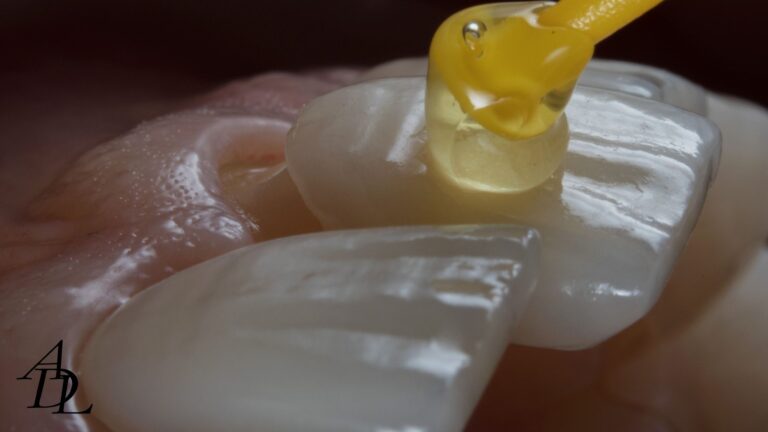
A predictable lithium disilicate bonding workflow:
- HF etch lithium disilicate (IFU time)
- Rinse/dry
- Silane for ceramics (IFU dwell)
- Adhesive resin cement
Recent clinical literature continues to emphasize careful adherence to lithium disilicate bonding steps (material conditioning and adhesive strategy) for reliable outcomes. PMC
“Etch & prime” alternative
Some systems offer a single-step approach to etch and silanate glass-ceramics (designed to reduce HF handling). This can be a useful option when used as directed.
Feldspathic porcelain bonding (veneers, porcelain repair, some CAD blocks)
What to use (high-level)
- HF etch + silane remains a classic approach for feldspathic porcelain bonding. Ultradent
Step-by-step feldspathic porcelain bonding
- Etch
- Feldspathic porcelain often uses stronger/longer HF protocols than lithium disilicate (follow IFU).
- Commercial porcelain etch products commonly reference veneer/crown applications and timed use. Ultradent+1
- Rinse, dry
- Thorough rinse is non-negotiable.
- Silane
- Apply silane; dwell; air-dry.
- Adhesive resin cement
- Proceed per your cement system IFU.
Practical example: feldspathic veneer with high esthetic demand
- Feldspathic porcelain bonding is where clean isolation and correct HF + silane steps pay off most, because you’re often relying heavily on the bond for long-term performance and margin integrity.
Hybrid ceramics and “hybrids”: ENAMIC, resin nano ceramic, and mixed materials
This is where teams most often get tripped up because the words “hybrid,” “ceramic,” and “CAD/CAM block” make people assume “HF + silane works for all.” It doesn’t.
Hybrid ceramic bonding (VITA ENAMIC)
- Manufacturer guidance indicates conditioning approaches that can include HF etching and silanization (follow the specific ENAMIC bonding guide).
- Independent scope reviews on hybrid ceramics also discuss how different surface treatments influence adhesion.
Resin nano ceramic bonding (Lava Ultimate and similar)
- Manufacturer documentation explicitly notes that HF etching does not roughen resin nano ceramic surfaces; sandblasting and appropriate primer steps are used instead.
Hybrid workflow reality check
If you do not know whether your “hybrid” is closer to glass-ceramic or composite:
- Ask your lab what the material is
- Use the manufacturer’s conditioning guide
- Use a consistent ceramic primer steps checklist
Ceramic Primer Steps: A universal mindset (not a universal shortcut)
A lot of confusion comes from the word “primer.” There are different kinds of primers:
- Silane: for silica-based ceramics (lithium disilicate, feldspathic, leucite-reinforced)
- MDP primer: for metal oxides (zirconia, alumina) and also useful for metals and titanium in certain workflows
- Universal ceramic primers: products that combine MDP + silane in one bottle, intended to simplify multi-substrate bonding
The key takeaway
- If the ceramic is silica-based: etch + silane is foundational.
- If the ceramic is zirconia/oxide-based: sandblast zirconia + MDP is foundational.
Sandblasting zirconia: parameters, purpose, and pitfalls
What sandblasting zirconia does well
- Increases surface roughness and micro-retention
- Improves wetting and adhesive interaction
- Pairs with MDP chemistry for a more durable zirconia bonding protocol (supported by systematic review findings and manufacturer guidance). The Open Dentistry Journal
What sandblasting zirconia can do poorly (if overdone)
- Round margins
- Introduce surface flaws (especially at thin edges)
- Reduce fit if internal surfaces are aggressively abraded
Practical tips labs use
- Keep abrasion controlled and consistent (short duration, sweeping motion)
- Avoid blasting areas that affect precision interfaces (implant connections, Ti-base mating surfaces)
- Document your parameters as part of quality control for repeatability (this is where a lab’s internal consistency can reduce remakes)
Associated Dental Lab’s clinical guidance for Ti-base workflows highlights commonly used baselines (50 μm Al₂O₃, modest pressure, brief duration) and emphasizes controlled abrasion and cleaning before priming and cementation. Associated Dental Lab
HF etch lithium disilicate: effectiveness, timing, and “don’t do this twice”
HF works because it selectively dissolves parts of the glassy matrix, creating micromechanical retention. The trap is that “more etch” is not always better.
A commonly cited clinical caution: re-etching lithium disilicate or over-etching can negatively affect bonding performance; timing matters and should be IFU-guided.
Practical lithium disilicate bonding reminders
- Etch time is material-dependent (CAD vs press; brand-specific)
- Rinse thoroughly
- Silane needs proper dwell/evaporation time
- Avoid saliva contamination after etch/silane
The contamination problem: saliva, blood, and “try-in” reality
Even perfect surface treatment can fail if the intaglio is contaminated after conditioning. Common contamination points:
- Try-in without isolating the restoration
- Touching the intaglio with gloves contaminated by handpiece oil or eugenol products
- Hemostatic agents residue near margins
- Powder sprays or scanning sprays left on internal surfaces
Lab-informed habit: build “cleaning” into your protocol as a formal step, not an assumption. Ivoclar’s clinical guidance on pretreatment includes cleaning as a distinct part of the pretreatment sequence.
A “copy/paste” checklist you can use chairside
The 60-Second Material ID Checklist
- What is the crown/veneer/inlay made of?
- Zirconia (oxide ceramic)
- Lithium disilicate (glass-ceramic)
- Feldspathic/leucite (glass-based porcelain)
- Hybrid ceramic (ENAMIC-type)
- Resin nano ceramic (Lava Ultimate-type)
- Is the case being bonded or cemented?
- Adhesive resin cement (bonding)
- Self-adhesive resin cement / RMGI (cementing)
The Ceramic Conditioning Checklist (template)
- Confirm material type from lab slip/packaging.
- Perform the correct surface treatment:
- Zirconia: sandblasting zirconia + MDP primer
- Lithium disilicate: HF etch lithium disilicate + silane for ceramics
- Feldspathic: HF etch + silane
- ENAMIC/hybrid ceramic: follow manufacturer guide (often HF + silane or sandblast + silane per guide)
- Resin nano ceramic: sandblast + primer (HF ineffective)
- Clean, dry, and avoid contamination.
- Follow cement system IFU.
- Verify fit, margins, contacts, occlusion.
- Seat, tack, clean excess, final cure per IFU.
3M’s pretreatment guides and step-by-step booklets are helpful examples of how manufacturers formalize “pretreat restoration according to material” before cementation.
Practical scenarios: what to do in the real world
Scenario 1: “The lab says zirconia, but the intaglio looks glossy”
What it might be:
- A polished zirconia intaglio (common)
- A glazed internal surface (less common, but possible)
What to do:
- Do not HF etch.
- Lightly air abrade (sandblasting zirconia) per your controlled protocol.
- Clean thoroughly.
- Apply MDP primer and proceed with resin cement if bonding.
This aligns with common recommendations from zirconia bonding literature and manufacturer discussions emphasizing abrasion + MDP chemistry.
Scenario 2: “Lithium disilicate crown, but it was tried-in and now we’re bonding”
What to do:
- Re-clean per your preferred IFU-consistent method for try-in contamination.
- Ensure the HF etch lithium disilicate step is done correctly (or re-established based on your system guidance).
- Apply silane for ceramics and proceed.
Ivoclar’s pretreatment guidance highlights that the pretreatment protocol (including cleaning and etching) is material-dependent and should be followed systematically.
Scenario 3: “Hybrid ceramic onlay: should we etch or sandblast?”
What to do:
- Identify whether it’s a hybrid ceramic like ENAMIC or a resin nano ceramic like Lava Ultimate.
- Follow that manufacturer’s guide:
- ENAMIC: guidance supports conditioning approaches that can include HF and silane (per guide).
- Lava Ultimate: HF does not roughen; sandblast and prime instead.
Safety: HF is not a casual material
If you use HF intraorally or extraorally, treat it like the hazardous chemical it is:
- Use appropriate PPE and isolation
- Follow your etchant manufacturer’s safety guidance (SDS)
- Have an emergency plan (many safety authorities emphasize immediate management and medical evaluation for exposure)
HF hazards and first-aid guidance are well documented in public health and safety references (including CDC guidance on hydrogen fluoride exposure management).
Quality control: how the lab can reduce debonds before they reach your operatory
A high-performing lab doesn’t just “make the crown.” It reduces variability across:
- Material selection
- Surface finishing and internal cleanliness
- Documentation (what material was used, what cementation category is recommended)
- Case communication and troubleshooting support
FAQ: Sandblast, Etch, or Prime?
1) What is the best zirconia bonding protocol for long-term retention?
A reliable zirconia bonding protocol typically includes sandblasting zirconia (air abrasion) to create micromechanical retention, followed by an MDP primer (or MDP-containing universal adhesive) and a compatible resin cement system.
2) Do I need HF etch lithium disilicate every time?
For adhesive bonding, HF etch lithium disilicate (per IFU time) followed by silane for ceramics is a common, evidence-supported pathway for strong bonding to glass-ceramics. Always use manufacturer-recommended times and avoid over-etching. Ivoclar+2Bayshore Dental Studio+2
3) Can I use silane for ceramics on zirconia?
Silane for ceramics primarily couples to silica-based ceramics. Zirconia is an oxide ceramic, so silane alone is not the main chemistry. A zirconia bonding protocol typically uses MDP primer after air abrasion.
4) What are the ceramic primer steps if I want one simplified approach?
Many clinicians simplify by using a universal ceramic primer that includes both MDP primer chemistry and silane components—useful when you routinely bond multiple ceramic families. You still need the correct surface conditioning (sandblast zirconia vs HF etch lithium disilicate).
5) How do I handle hybrid ceramic bonding without guessing?
Identify the exact material and follow the manufacturer guide. For example, guidance for VITA ENAMIC includes conditioning and silanization steps, while resin nano ceramics like Lava Ultimate note HF doesn’t roughen the surface and recommend sandblasting plus priming.
6) Is HF safe to use in dentistry?
HF is hazardous and requires strict isolation, PPE, and adherence to manufacturer safety guidance. Public health references (including CDC guidance for hydrogen fluoride exposure) emphasize careful prevention and prompt management if exposure occurs.
7) Why do debonds happen even when I “follow the steps”?
Most debonds trace back to one of these: wrong conditioning pathway for the material, contamination after try-in, skipped primer dwell/evaporation, or inconsistent sandblasting zirconia parameters. Manufacturer pretreatment guides emphasize matching pretreatment to the restorative material and following IFUs closely.
Conclusion: make bonding boring (that’s the goal)
When your zirconia bonding protocol is standardized, and your lithium disilicate bonding steps are consistent, bonding becomes boring—in the best way. The decision is no longer “sandblast, etch, or prime?” because you’ve built a material-based pathway that answers it automatically:
- Zirconia: sandblasting zirconia + MDP primer + resin cement
- Lithium disilicate: HF etch lithium disilicate + silane for ceramics + adhesive resin cement
- Feldspathic: HF etch + silane + adhesive resin cement
- Hybrid ceramics: follow the manufacturer’s guide; don’t assume HF works for every “ceramic”
- Resin nano ceramics: sandblast + primer; HF isn’t the roughening step
If you want fewer debonds, fewer remakes, and smoother seat appointments, the biggest win is not a “new cement.” It’s consistent execution of the right template for the right substrate—every time.
About Associated Dental Lab
Associated Dental Lab partners with dentists who want predictable outcomes across fixed restorations, implant restorations, and removable cases, with strong case communication and practical, real-world guidance. If you want a lab that helps you standardize your workflows (and reduce the “mystery failures” that waste chair time), contact Associated Dental Lab to become a dentist-supported, full-service dental lab partner.