If a patient loses or breaks a denture the night before a trip, the fastest way back to normal is having a second set ready to go. Duplicate dentures—often called copy dentures—give patients a safety net and give clinicians a streamlined workflow for remakes, upgrades, and emergency replacements. With modern scanning and printing, a digital copy denture can be produced from an existing appliance without starting from scratch, often with targeted improvements to fit, esthetics, or occlusion.
What Are Duplicate Dentures?
A quick definition
Duplicate dentures are replacement or copy dentures created by replicating a patient’s existing prosthesis. The copy can be one-to-one (a travel spare) or “copied with improvements,” where you retain what patients love (tooth size, lip support) and refine what they don’t (fit, phonetics, sore spots).
Why clinicians and patients love them
- Speed: No full remake from impressions to try-in when time is short.
- Predictability: You start from a proven esthetic and vertical dimension.
- Continuity: Patients keep the look they identify with while you subtly enhance function.
- Risk management: Backup dentures / spare dentures prevent last-minute emergencies from derailing life events.
When to Recommend Copy Dentures
- Frequent travelers or entertainers: A spare set lives in the carry-on or a safe.
- Medically fragile patients: Minimizes chair time, avoids multiple long visits.
- Proven, beloved esthetics: Keep the smile design while improving fit or phonetics.
- High break/loss risk: Patients with dexterity issues or prior history of fractures.
- Transition plans: Use a digital copy denture as an interim while planning implant overdentures or a comprehensive redesign.
Digital Copy Denture vs Traditional Copy Denture Technique
Traditional copy denture technique
Historically, clinicians duplicated dentures using alginate or silicone matrices and autopolymerizing acrylic. This worked, but it locked in small errors and offered limited options for records reuse or rapid remakes.
Digital copy denture (today’s default)
With scanners, CAD, and 3D printed dentures, labs can capture the existing prosthesis, edit tooth setup and bases digitally, and output a same-day or rapid-turn copy with more control over thickness, tooth morphology, and occlusion. Associated Dental Lab highlights these digital capabilities across its site and blog (CAD/CAM, 3D printing, and removable workflows), underscoring practical advantages for timelines and repeatability.
Bottom line: The digital copy denture pathway is faster to iterate, easier to archive, and simpler to reproduce on demand—ideal for fast denture remake scenarios.
The Lab-Backed Workflow (Step-by-Step)
1) Intake and evaluation
- Talk esthetics first: “What do you like about your current smile?” Photograph the patient wearing the denture—full-face, repose, smile, profile.
- Inspect the prosthesis: Note wear facets, midline, phonetics, border polish, and any fracture lines.
- Decide the scope: One-to-one copy dentures or “copy plus improvements” for fit, OVD, or shade.
2) Data capture options
A. Scan existing denture (preferred digital path)
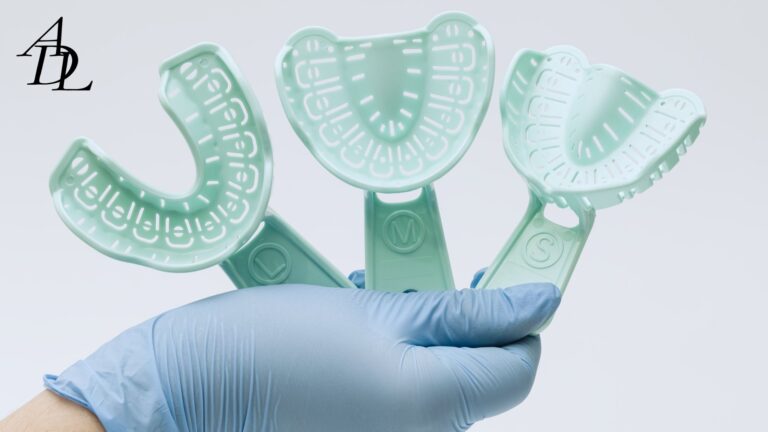
- Intraoral scan of edentulous arches + extraoral scan of the denture (intaglio and cameo) or lab scan of the physical denture.
- Capture bite with the denture in place if vertical is stable.
- Send to the lab with notes (“Keep tooth lengths, slightly flatten posteriors, add post-dam”).
B. Analog copy denture technique
- Duplicate the denture in a matrix, pour, and create a copy shell for impression borders and functional wash, then proceed with lab processing.
Associated Dental Lab supports digital submissions and traditional shipping with a downloadable lab slip and local pickup, helping teams move cases without friction.
3) CAD setup and print/mill
- The lab mirrors tooth positions and gingival contours from the original while allowing measured edits to OVD, occlusal scheme, and base thickness.
- First output is often a 3D printed dentures trial (monolithic try-in) to confirm esthetics, phonetics, and occlusion—faster than a wax try-in and easy to tweak. Associated Dental Lab’s blog discusses 3D printed approaches as a key innovation in dentures.
4) Delivery and adjustments
- Check extension, PPS/post-dam, occlusion in MIP/laterals/protrusive, and phonetics (F/V, S sibilants).
- Document any changes; the lab can update the digital file so the archive becomes “truth” for the next fast denture remake.
5) Archive for the future
- Store the STL and design files. When the patient needs backup dentures / spare dentures or a replacement, the lab can reprint or mill with minimal extra steps—speeding delivery. Associated Dental Lab emphasizes repeatable, digital-first workflows to reduce turnaround.
Where Copy Dentures Shine (Real-World Use Cases)
Travel backup that actually gets used
A frequent flyer keeps duplicate dentures in a travel kit. The primary fractures at a conference dinner; the spare dentures come out, and the only appointment needed is a non-urgent repair visit after the trip.
“Copy with improvements” for phonetics
A patient loves their smile but whistles on “S.” You copy the denture and slightly reshape palatal contours and incisal embrasures in CAD. The copy dentures look identical but speak better.
Rapid replacement after loss
Because the files are archived, a fast denture remake is as simple as a call: “Please reprint the upper; use the last occlusal refinement.” No new impressions, just confirmation of shipping or pickup. (ADL offers local pickup and shipping options to streamline this.)
Esthetics, Fit, and Function: What Stays the Same and What Can Improve
Keep the smile the patient knows
- Tooth position & display: Duplicate the incisal edge position, midline, and smile arc.
- Lip support: Maintain labial flange thickness and contour unless the patient requests a change.
- Shade & texture: Match shade or go slightly lighter if requested; replicate micro-texture.
Improve what matters clinically
- Occlusal scheme: Refine contacts to broaden support and reduce lateral interferences.
- Base robustness: Increase thickness at stress points, refine frenal reliefs, enhance PPS.
- Polish and hygiene: High-gloss surfaces and rounded embrasures reduce plaque retention.
Materials and Methods: “Print,” “Mill,” or Pack-and-Press?
- 3D printed dentures: Fastest to produce and iterate; modern printed resins offer excellent esthetics and strength for many indications. ADL discusses printed dentures as a major advance in digital dentistry.
- Milled PMMA: Dense, color-stable, and polishable; ideal for a premium spare or for patients who are rough on appliances.
- Conventional acrylic processing: Still a workhorse for certain shades and workflows; often used when duplicating legacy dentures where exact shade/matching is critical.
Your lab can advise which route best fits the patient’s budget, timeline, and durability needs; ADL’s product pages and blog reflect their broad removable capability (from flexible partials to traditional and digital dentures).
Duplicate Denture Cost: What Drives Pricing?
- Data capture: chairside time for scanning vs impressions and shipping.
- Material choice: printed vs milled base/teeth; premium tooth libraries.
- Number of sets: producing two copy dentures at once can lower per-unit cost compared with two separate orders.
- Edits vs exact copy: the more refinement (OVD change, occlusal re-scheme), the more design time.
- Finish level: monolithic printed try-in vs fully characterized and glazed final.
Tip: Present three tiers—basic travel spare, copy with refinements, and premium milled—so patients choose speed vs cosmetics knowingly.
Turnaround Time: How “Fast” Is a Fast Denture Remake?
With a digital copy denture file already archived—and a lab partner set up for quick logistics—reprinting or milling a second set can be very fast. ADL’s site highlights local pickup options, prepaid shipping, and in-house fabrication “Made in Los Angeles,” which help compress total calendar time compared with outsourcing.
Copy Dentures vs Remake from Scratch
| Decision Factor | Copy Denture (Digital) | Full Remake |
|---|---|---|
| Esthetics | Matches proven look | New smile design decisions |
| Appointments | Fewer, shorter | More records, try-ins |
| Speed | Fast denture remake from archive | Longer |
| Risk | Low—known vertical & phonetics | More variables |
| Cost | Often lower for spare | Higher for full redesign |
Rule of thumb: If the patient already loves the look and just needs a backup dentures / spare dentures, choose a digital copy denture and archive. If they want a new esthetic identity or a different OVD, plan a full remake—but still scan and archive the old denture as a safety net.
Lab Communication: What to Tell Your Technician
- Intent: “Exact duplicate for travel” vs “copy + improve occlusion.”
- Must-keeps: tooth length, midline, shade, lip support.
- Change list: occlusion, PPS, flange reliefs, phonetic tweaks.
- Deliverables: STL of scans, photos (repose/smile/profile), and a marked-up screenshot of any desired changes.
- Contingency: “If the old denture scans poorly in the posterior palatal seal, please confirm before finalizing.”
Associated Dental Lab provides clear submission pathways (downloadable lab slip, contact, and Send a Case process), which helps teams avoid back-and-forth delays.
Quality Control and Longevity
- Fit verification: pressure-indicator paste at delivery; adjust borders and PPS.
- Occlusal check: shimstock in MIP plus excursions; broaden contacts as needed.
- Polish: a high-gloss cameo surface extends the “new denture” feel and resists plaque.
- Nightly storage: advise patients to store in water (not hot) and clean daily with non-abrasive cleansers.
- Re-baseline: if you refine the duplicate chairside, ask the lab to update the digital record so the next print mills from the corrected file.
Frequently Asked Questions (FAQ)
1) What are duplicate dentures and when are they useful?
They’re one-to-one copy dentures of an existing appliance. They’re ideal as backup dentures / spare dentures for travelers, for emergency fast denture remake, or for patients who love their current esthetics but want a slightly better fit or occlusion.
2) How does a digital copy denture differ from the traditional copy denture technique?
The scan existing denture approach captures the prosthesis digitally, enabling CAD edits and quick 3D printed dentures or milled outputs. It’s faster to iterate, easier to archive, and simpler to reproduce on demand than analog duplication. ADL emphasizes digital scanning/printing capabilities across their site and blog.
3) What impacts duplicate denture cost?
Material (printed vs milled), scope (exact copy vs copy with improvements), and the number of sets produced at once. Logistics—like local pickup or prepaid shipping—can also influence total cost and turnaround. ADL provides these options to simplify submissions.
4) Can you scan existing denture if it’s old or worn?
Yes. Minor wear isn’t a problem; your lab can smooth artifacts in CAD and selectively thicken weak areas. If the old denture is highly distorted or cracked, the lab may propose a short reline/repair or a quick border-mold impression inside a printed copy shell to capture functional tissues more accurately.
5) How fast can a fast denture remake really be?
If the lab already archived your digital copy denture files, reprinting or milling can be very quick. In-house fabrication and local pickup accelerate timelines, as highlighted by ADL’s “Send a Case” and “Made in Los Angeles” pages.
6) Are 3D printed dentures durable for everyday wear?
Modern printed resins are designed for clinical use and perform well when correctly processed, polished, and reinforced where needed. Many practices choose a printed copy for the spare and a milled or conventionally processed set for daily wear, depending on preference and budget. ADL’s blog features 3D printing as a key part of modern denture fabrication.
7) What if my patient wants changes—shade, tooth shape, or phonetics—on the copy?
That’s the beauty of the digital copy denture: you can keep what the patient likes and change specific elements in CAD. Just outline the “must-keeps” and “must-changes” on the RX and photos; your lab will design accordingly.
Conclusion
For many denture patients, a spare set isn’t a luxury—it’s insurance. Duplicate dentures and copy dentures convert a single point of failure into a digital, repeatable process you can activate at any time. By scanning the existing denture, saving an editable record, and using 3D printed dentures or milling for output, you and your lab can deliver a fast denture remake when life happens. Whether the goal is a travel backup, a comfort-tuned duplicate, or a stepping-stone to a larger prosthetic plan, the digital copy denture workflow brings speed, predictability, and peace of mind.
About Associated Dental Lab
Associated Dental Lab is a dentists’ trusted Full-Service Dental Lab in Los Angeles, “Crafting Smiles since 1962.” They accept digital submissions, offer a downloadable lab slip, and can arrange local pickup or prepaid shipping. All work is fabricated in-house for quality control and reliable timelines—making duplicate dentures and copy dentures workflows practical for everyday practice. If you want a partner fluent in digital scanning, CAD/CAM, and removable prosthetics, contact Associated Dental Lab and send your next case with confidence.