Few decisions influence long-term implant success—and chairside efficiency—more than your choice of retention. The clinical calculus is more nuanced than “esthetics vs convenience.” Today, innovations like the angulated screw channel (ASC), improved hybrid abutments, and digital workflows have shifted the balance between screw-retained vs cement-retained implant crown options. Understanding when each modality wins (and why) will sharpen your diagnosis, reduce remakes, and minimize complications like residual cement peri-implantitis.
At Associated Dental Lab in Los Angeles, we restore both approaches every day—single units to full-arch—using modern CAD/CAM, verified libraries, and collaborative communication so your cases seat quickly and look great. Our team fabricates custom crowns for natural teeth and implants, offers fast turnarounds, and supports digital submissions alongside local pickup for practices nearby.
This in-depth guide compares screw retained vs cement retained implants across indications, biomechanics, occlusion, esthetics, and maintenance. You’ll find a practical decision matrix, real-world examples, and lab-level tips (including torque values implant screws guidance) to simplify case planning.
The Core Question: Screw-Retained vs Cement-Retained Implant Crown
Both retention types can deliver years of service when case selection and execution are sound. Systematic reviews show advantages on both sides: some report fewer biological and technical complications with screw retention, while others note fewer prosthetic complications and comparable survival with cement retention. The takeaway isn’t that one is “always better,” but that indication-driven selection maximizes your retrievability implant restoration and minimizes risk. PMC
Why retention choice matters
- It affects site health (cement vs no cement), maintenance, and the ability to intervene if biology or occlusion change.
- It dictates restorative space requirements, access hole location, and esthetic trade-offs.
- It influences lab design steps (abutment choice, materials, and verification) and your delivery appointment time. Glidewell Dental
Advantages at a Glance
When screw-retained shines
- Retrievability implant restoration: easy access for hygiene, screw check, or repairs without destroying the crown.
- No cement line: eliminates the risk of residual cement peri-implantitis.
- Less restorative space: especially valuable in limited interocclusal space situations.
- ASC flexibility: modern angulated screw channel (ASC) repositions access up to ~25° to improve esthetics. PubMed
When cement-retained fits better
- Esthetics when an access hole would be facial despite ASC options, or when occlusal access compromises thin ceramics.
- Implant angulation that still defeats ASC ranges or systems without ASC support.
- Passive seating on a well-designed custom abutment when you need ideal emergence and margin control. Nobel Biocare
Biological Risk: The Cement Question
The link between excess cement and peri-implant disease is well-described. Wilson’s endoscopic study found a strong association between residual cement and peri-implantitis signs, reinforcing why every cemented case needs disciplined cement control—or an alternative retention plan. Screw-retained crowns remove cement from the equation.
Clinical implication: if your margin must be subgingival (thin biotype, esthetic demands), plan at the diagnosis stage how you’ll prevent and verify cement removal—or steer toward screw retention or ASC to avoid cement entirely.
Space and Occlusion: Getting the Physics Right
Limited interocclusal space
Cementation requires room for abutment height, cement space, and restorative thickness. Evidence-based guidance suggests cement-retained restorations generally need more vertical space than screws; screw-retained designs can succeed with less because there is no bonded cement interface. In tight verticals, screws are often the safer, faster choice. New West Dental Ceramic
Load, access, and material thickness
- Heavy occlusion or parafunction favors robust monolithic designs with controlled access paths; ASC can move access to safer occlusal zones, preserving ceramic thickness.
- If the access hole would land on a thin incisal edge or a facial surface, ASC (0–25°) or a cemented plan may be indicated to maintain strength and esthetics.
Esthetics: Managing the Access Hole vs the Margin
Modern composites and opaquers make access holes nearly invisible in posterior zones and discreet in many anteriors—especially when ASC moves the channel to the palate. Yet there are still cases where even an angled access hole would compromise appearance. That’s when a custom abutment with a carefully controlled, shallow subgingival margin keeps cement retrievable and the soft tissues happy.
Custom vs Stock Abutment: Control the Biology, Control the Outcome
For cement-retained plans, custom vs stock abutment selection directly affects margin placement, emergence profile, cleansability, and esthetics. Studies and expert guidance note that custom abutments (CAD/CAM titanium or zirconia) allow you to place the margin where cement can be removed, deliver an anatomic emergence, and reduce over/under-contoured crowns—advantages stock abutments can’t consistently match.
Emerging data also report mechanical benefits with customized designs in certain scenarios, though literature is mixed and system-dependent. As always, case design, materials, and lab execution drive the final result. Wiley Online Library
ASC: Expanding Screw-Retained Indications
The angulated screw channel (ASC) is a game-changer: by allowing the screw access hole to deviate up to roughly 25° within a 360° radius, ASC frequently converts a “cement-only” case into a screw-retained one—without putting a hole through the facial. Early clinical and in-vitro work shows promising success with low mechanical complications when ASC is used within design limits.
Use ASC when:
- The implant’s trajectory would otherwise create a facial or incisal access hole.
- You want screw retrievability in the esthetic zone.
- You have sufficient restorative thickness to accommodate the off-axis channel and driver geometry.
Torque Values, Screws, and Preload: Small Numbers, Big Consequences
Correct torque values implant screws are essential to establish screw preload and minimize loosening. Values vary by manufacturer, connection, and screw type (e.g., titanium, gold-colored coated, Omnigrip). Examples from IFUs show ranges around 20–35 Ncm, and ASC systems commonly specify 35 Ncm—but always follow the device-specific instructions for use and use a calibrated torque driver. Avoid repeated tightening beyond manufacturer guidance to prevent loss of preload.
Chairside checklist:
- Verify platform/connection and screw type on the lab slip and delivery kit.
- Use the manufacturer’s driver (ASC drivers are often proprietary).
- Torque to spec, then re-torque after 5–10 minutes if recommended.
- Document torque in the chart and the lab’s quality record.
Decision Matrix: Screw-Retained vs Cement-Retained Implants
Choose screw-retained when…
- You want retrievability implant restoration for hygiene or maintenance.
- There’s limited interocclusal space or tight vertical dimension.
- You’re concerned about residual cement peri-implantitis (thin tissue, deep sulcus).
- ASC can move the access off the facial/incisal to a palatal/occlusal location.
Choose cement-retained when…
- ASC still can’t produce an acceptable access location.
- Esthetic demands preclude any access opening in thin ceramics.
- A custom abutment will optimize emergence and margin accessibility for cement cleanup.
Hybrid approaches to consider:
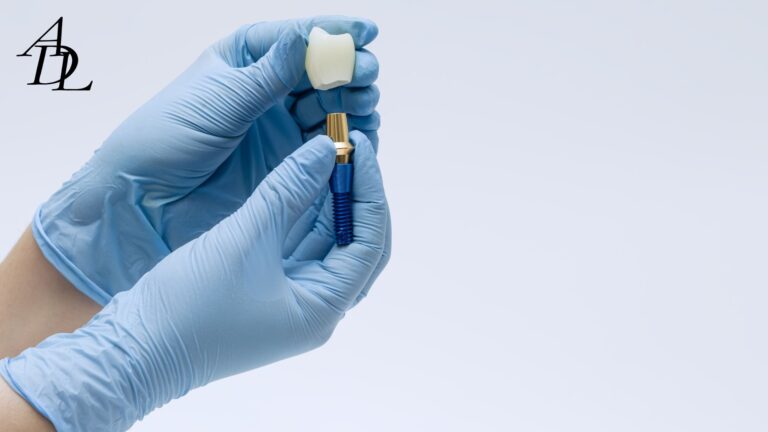
- Screw-retained crown on a Ti-base (luted extraorally): “cement-free” in the mouth but keeps retrievability.
- “Cement-then-screw” restorations for complex frameworks with verification jigs and lab-controlled cementation.
Step-by-Step: Designing for Predictability
1) Start with emergence and margin philosophy
If cement-retained, specify a custom abutment with shallow, supragingival or equigingival margins wherever possible to enable complete cement removal. In the esthetic zone, staggered margin depths can balance tissue support with cleanability.
2) Model access and thickness
For screw retention, confirm where the access lands (with/without ASC) and ensure restorative materials meet minimum thickness. When in doubt, request a lab design preview and approve before milling.
3) Control occlusion
Flatten narrow, high-stress contacts around access holes. If an access falls on a functional cusp, ASC or a cemented plan may reduce fracture risk.
4) Delivery discipline
- Screw-retained: torque to manufacturer spec; seal the access (PTFE + composite) with shade-matched resin.
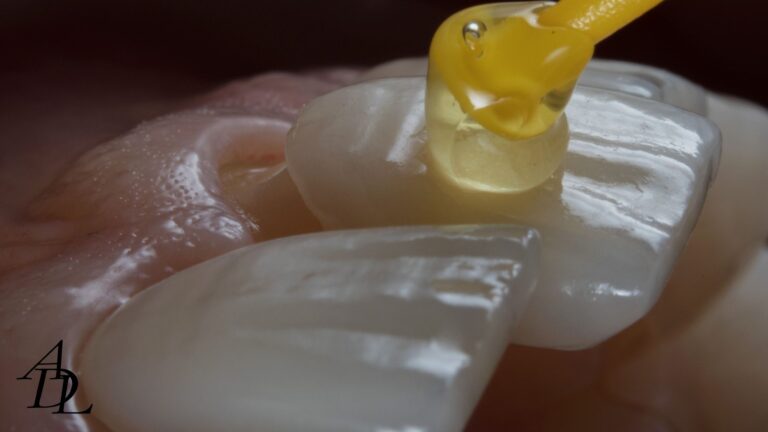
- Cement-retained: use minimal cement, venting techniques, and floss/ultrasonic to verify removal; take a post-cement periapical or clinical photo to document cleanup.
Real-World Scenarios
Case 1: Posterior single unit with tight vertical
Limited vertical room and a lingual-inclined implant. Screw retention chosen; ASC shifts access to central fossa; zirconia monolith used; fast seat and ideal maintenance access.
Case 2: Maxillary lateral incisor in thin biotype
ASC would still place access in the incisal third. A custom zirconia abutment sets a 0.5–1.0 mm subgingival margin for esthetics; cementation performed with strict cleanup protocol to avoid residual cement peri-implantitis.
Case 3: Two splinted mandibular implants with divergent axes
ASC corrects up to 25°, enabling a screw-retained bridge and eliminating cement; torque per IFU; access holes restored with tinted composite.
Communication That Prevents Remakes (and Emergencies)
Your lab will make a better restoration when you send:
- High-quality scans/impressions plus retracted photos.
- A clear note: “screw-retained vs cement-retained implant crown” requested, preferred access position, and whether ASC is acceptable.
- Material, shade, and occlusal scheme.
- Implant system, platform, and torque values implant screws per manufacturer (or ask the lab to confirm).
Associated Dental Lab emphasizes this case communication—and can advise on retention choice, abutment design, ASC availability, and timelines—so you avoid surprises and shorten seat times.
How Associated Dental Lab Supports Your Choice
- Both pathways, expertly: From custom abutments to screw-retained crowns with ASC, we design for clean margins, robust emergence, and access where you want it.
- Digital to analog: We accept major scanner files and traditional impressions, with collaborative previews on complex access scenarios.
- Fast, reliable turnarounds: Standard in-lab times with rush options; same-day local repairs available in Los Angeles.
- Quality you can feel: Crowns for natural teeth and implants, crafted with premium materials and rigorous QC—since 1962.
Frequently Asked Questions (FAQ)
1) Which is “better”: screw retained vs cement retained implants?
Neither is universally better. Screws reduce cement-related risks and improve retrievability implant restoration; cement may offer esthetic advantages when access holes are problematic. Choose based on tissue, space, angulation (ASC options), and maintenance priorities.
2) When is ASC appropriate?
Use an angulated screw channel (ASC) when you need screw retrievability but the straight access would be facial or incisal. ASC allows ~0–25° of redirection in a 360° radius, often moving the access to palatal/occlusal surfaces.
3) How does limited interocclusal space affect the choice?
Screw-retained designs typically require less vertical room than cemented ones; in tight spaces, screw retention helps preserve material thickness and avoids compromised abutment height.
4) Is residual cement peri-implantitis a real concern?
Yes. Multiple reports associate excess cement with peri-implant inflammation and bone loss. If you cement, design custom abutments with accessible margins and verify meticulous cleanup—or choose screw retention to eliminate the risk.
5) What about custom vs stock abutment on cemented cases?
Custom abutments let you place margins for easy cement removal and create natural emergence; stock parts are less adaptable. Evidence indicates mechanical and esthetic advantages for customized designs in many scenarios.
6) What torque values implant screws should I use?
Follow the manufacturer’s IFU. Typical ranges are roughly 20–35 Ncm depending on the system and screw/coating; some ASC abutments specify 35 Ncm. Use a calibrated torque driver and document the value.
7) Can I mix approaches across the arch?
Absolutely. For example, you might use ASC-enabled screw retention posteriorly and a carefully managed custom abutment with cement retention for a high-visibility lateral incisor. Let your lab model both and help you compare.
Conclusion
Choosing between screw-retained vs cement-retained implant crown designs is ultimately about risk control and serviceability. If you need retrievability implant restoration, face limited interocclusal space, or want to eliminate the possibility of residual cement peri-implantitis, screw retention—often with ASC—is compelling. When the access hole compromises strength or esthetics and ASC can’t solve it, a custom abutment with strategically placed margins makes cement retention safe and beautiful. Back your decision with correct torque values implant screws, clean workflows, and tight lab communication, and you’ll enjoy higher first-seat rates and happier patients.
About Associated Dental Lab
Associated Dental Lab is a dentists’ trusted Full-Service Dental Lab in Los Angeles. We craft custom crowns for teeth and implants, offer both screw-retained and cement-retained solutions (including ASC), and support digital or traditional workflows with reliable turnarounds and collaborative design reviews. Send your next implant case to a partner who protects your schedule and your reputation.