Blog

Insights, Innovations & Best Practices in Dental Lab Work

Stay Ahead of the Curve

News, Techniques & Trends from the Lab Floor

Explore expert insights, dental lab innovations, and practical tips to enhance your clinical outcomes. From material selection to workflow efficiency, our blog helps you stay informed and deliver better patient care.

RPD framework try-in checklist to confirm path of insertion, rest seat verification, major connector fit, and efficient RPD adjustments.

A removable partial denture can be a patient’s “best new teeth” or their biggest frustration. And in most cases, the difference comes down to one appointment: the RPD framework try-in.

Hybrid Bar Materials: Titanium vs Cobalt Chrome vs PEEK-Reinforced PMMA

When a patient chooses a full-arch implant restoration, they’re not just choosing teeth—they’re choosing a foundation. For many fixed and removable full-arch solutions, that foundation is a bar or framework

Scan Body Torque & Handling (Checklist): How to Prevent Indexing Errors and Protect Implant Accuracy

Digital implant impressions are only as accurate as the small component that “translates” implant position into a file your lab can design from: the implant scan body. When an implant

Resin Cement Selection by Indication

Most cementation failures are not “mysteries.” They’re mismatches—between the case’s retention needs and the cement strategy, between the ceramic substrate and the surface treatment, or between the operator’s isolation reality

Polishing vs. Glazing After Adjustments (Bench Test)

Every practice that seats crowns and bridges eventually faces the same moment: you’ve adjusted occlusion, refined a contact, or smoothed a rough edge—and now you have to decide what finish

Sandblast, Etch, or Prime? A Lab-Informed Bonding Template for Zirconia, Lithium Disilicate, Feldspathic, and Hybrid Ceramics

Bonding failures rarely happen because “bonding doesn’t work.” They happen because the wrong surface treatment was used for the actual material in your hand—or because a correct protocol was derailed

3 Unit Zirconia Bridge
Post-Cementation Sensitivity (Checklist)

Few phone calls rattle a schedule like a patient reporting post cementation sensitivity the morning after a crown seat. Sometimes it’s a fleeting zing to cold; other times it’s throbbing

Photogrammetry + IOS Hybrids (Decision Tree)

The rise of dental photogrammetry and intraoral scanning has transformed how clinicians capture implant positions—especially in full-arch cases where microns matter. Photogrammetry specialized systems triangulate the 3D coordinates of implant

Weekly KPI Dashboard with Your Lab: Remakes, On-Time %, Redos

If you don’t measure it every week, you can’t manage it next week. High-performing practices use a simple, shared dashboard with their lab to track dental lab KPIs—not once a

3 Unit Zirconia Bridge
Pre-Seat Checklists that Cut Chair Time 30% (Checklist)

The fastest crown seat is the one you barely notice. When a restoration drops to depth, contacts “snap,” occlusion marks are predictable, and cleanup takes seconds—not minutes—you feel it. The

Hard/Soft Nightguard
Nightguard Material Choices: Hard, Hard/Soft, Printed

If your goal is to stop cracked enamel, flattened cusps, and morning jaw fatigue, the appliance you prescribe matters. But so does the material. Amid today’s night guard types—classic hard

Valplast Partial Denture
Flexible vs. Acrylic Repairability: What to Promise (and Not)

Patients hear “repair” and think “simple fix.” Clinicians and labs know better: the feasibility, cost, and longevity of a repair depend heavily on the base material, fracture type, tooth interface,

Full-Arch PMMA Try-Ins: Aesthetics, VDO, Phonetics

In full-arch implant therapy, the step that most reliably prevents costly remakes isn’t fancy ceramics—it’s the rehearsal. A full-arch PMMA provisional (often a milled or printed PMMA provisional) functions as

Crowns on Stock Abutment
Ti-Base Height & Wall Engagement: Retention, Cement, Failures

If you’ve ever delivered a beautiful implant restoration that later “lets go” at the titanium interface or returns with a loose screw, you know the heartbreak: everything looked perfect on

A dentist taking a CT Scan on a patient
Scan Body Libraries: Version Control, Brand Mixing, Accuracy Traps

Implant restorations live or die on small details. Among the most critical—and most overlooked—are the implant scan body library you use and the real-world scan body compatibility between components, software,

IOS Scanning Wand next to Laptop displaying scan
IOS → Model-Free vs. Printed Models: A Lab-Informed Decision Guide

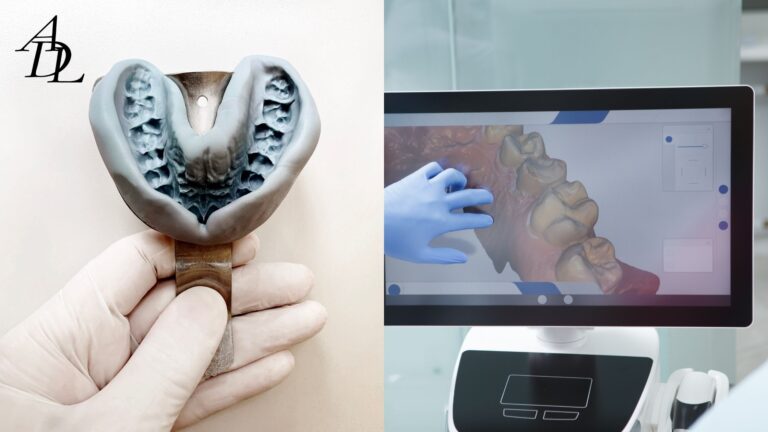
Intraoral scanning (IOS) gives you options. After you capture a flawless digital impression, you can send the case to your lab and finish it model-free (design, mill/print, deliver)—or you can

Duplicate Dentures (Digital Copy Dentures): Fast Remakes and Travel Backups

If a patient loses or breaks a denture the night before a trip, the fastest way back to normal is having a second set ready to go. Duplicate dentures—often called

Porcelain Margin
Margin Elevation vs. Crown Lengthening: A Lab-Informed Decision Guide

Restoring teeth with subgingival margins forces a fork-in-the-road decision: move the tooth–tissue complex apically with crown lengthening, or shift the margin coronally with deep margin elevation. Both strategies can produce

Lower Full Denture
Soft Reline vs. Hard Reline: Indications, Longevity, and Patient Expectations

A well-fitting denture is never “done.” Alveolar bone remodels, soft tissues change, and what felt snug last year can float this year. That’s where the denture reline earns its keep.

Scan Stitching Errors: How to Spot Them Before You Hit “Send”

Digital dentistry lives and dies on data integrity. A beautiful restoration can only be as accurate as the model beneath it. In the world of intraoral scanning, small mistakes—especially scan

PMMA vs. Bis-Acryl Updates: Strength, Polishability, and Stain Resistance

Provisional restorations do far more than “hold the spot.” The temporary sets patient expectations for esthetics and function, protects the prep, and previews occlusion and contours for the final. That’s

Rx “Do / Don’t” Gallery: Real Examples that Speed Up Your Cases

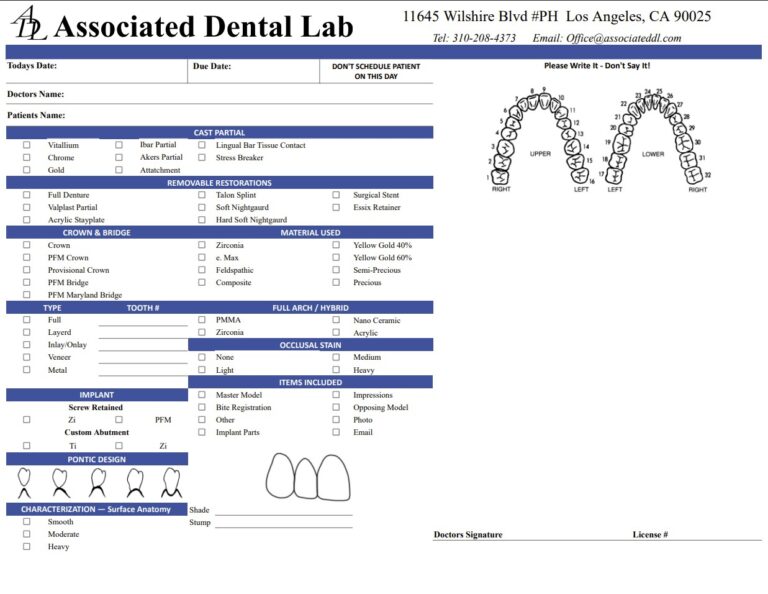
A perfectly prepped tooth can still turn into a long week if the dental lab prescription is vague, incomplete, or contradicts the scans. Every hour your team spends answering lab

Flexible Partials That Last: Clasp Design, Tooth Selection, and Finish Lines

When patients ask for a lightweight, metal-free partial that looks natural and feels comfortable, flexible partial dentures are often the first solution clinicians consider. Brands like Valplast dentures (and other

Hybrid Abutment Crowns on Ti-Bases (Bonding & Failure Prevention)

Few restorative choices can boost implant efficiency like a hybrid abutment crown on a ti-base abutment (ti-base crown). When you extraorally bond a monolithic ceramic to a titanium base and

Repairability by Material (What You & Patients Should Expect)

Not every broken restoration needs a full remake. In many cases, smart triage and the right protocol can get patients comfortable quickly and preserve what’s already working. Other times, a

Printed vs. Milled PMMA Provisionals: How to Choose the Right Temporary for Strength, Accuracy, and Speed

Every temporary restoration has a job: protect the prep, preserve occlusion, and preview the final. Yet the way you make that temporary—3D printed provisional crown or PMMA provisional crown (milled)—shapes

Photogrammetry in the Real World (Lab Integration): A Practical Guide for Predictable Implant Prosthetics

If you’ve restored even a handful of full-arch implants, you know the friction points: stitch errors with long scans, verification jigs that eat up time, and tiny misfits that become

Screw-Retained vs. Cement-Retained Crowns: How to Choose the Right Implant Retention for Predictable Results

Few decisions influence long-term implant success—and chairside efficiency—more than your choice of retention. The clinical calculus is more nuanced than “esthetics vs convenience.” Today, innovations like the angulated screw channel

HIPAA-Safe File Sharing With Your Lab: A Practical Guide for Dental Teams

Every successful case you send to the lab contains more than models, scans, and photos—it carries protected health information (PHI) that must be safeguarded at every step. As digital dentistry

When to Scan vs. When to PVS: A Practical, Clinically Grounded Guide

Over the last decade, the debate of digital impressions vs traditional impressions has moved from “if” to “when.” Most practices now own (or plan to buy) an intraoral scanner, yet

Have a Case in Mind? Let’s Talk.

Reading about dental innovations is great — applying them is even better. If you’re ready to start a case or want to learn how our lab can support your practice, we’re here to help.